


Views: 0 Author: Site Editor Publish Time: 2026-01-16 Origin: Site


Air curtains, also known as air doors, are increasingly being used in commercial and industrial spaces to improve energy efficiency, enhance comfort, and maintain a barrier between different environments. By creating a stream of air that flows across an opening, air curtains prevent drafts, dust, and insects from entering, while also maintaining a stable indoor temperature. They are widely used in places such as supermarkets, restaurants, office buildings, and warehouses.
One of the most frequently asked questions about air curtains is whether they consume a lot of electricity. As businesses and households become more conscious of energy consumption and costs, it is essential to understand the energy efficiency of air curtains and whether they contribute significantly to electricity bills. In this article, we will explore how air curtains work, their energy consumption, and whether they are an energy-efficient solution for various applications. By the end of this article, you will have a clear understanding of air curtain energy usage and whether it’s a sustainable option for your building.
Before diving into the energy consumption aspect, it is important to understand how air curtains work and their role in energy efficiency.
An air curtain functions by blowing a continuous stream of air across an opening, which separates the interior environment from the outside. This helps to maintain the desired temperature inside a building while keeping outside air, dust, and pollutants at bay.
Air curtains are typically installed above doorways or openings where temperature control is crucial. For example, in a cold storage facility, an air curtain can help to keep the cold air inside while preventing warmer external air from entering, thus reducing the energy required to maintain the internal temperature.
They are often used in combination with HVAC systems to improve energy efficiency by reducing the load on the heating and cooling systems. By preventing heat exchange between indoor and outdoor environments, air curtains help to minimize the loss of conditioned air.
One of the primary factors that determine the energy consumption of an air curtain is the size of the motor and its design. The larger and more powerful the motor, the more electricity the air curtain will consume. However, the efficiency of the motor also plays a significant role in determining how much energy the air curtain uses.
Air curtains come in different sizes and capacities, which vary based on the size of the opening they are meant to cover. Smaller motors are used for residential applications or small doorways, while larger, more powerful motors are used in commercial and industrial settings.
The power consumption of air curtains can typically range from 100 watts to 2,000 watts depending on the model and the size of the opening being covered. Larger units for industrial or commercial use may consume more electricity, but this is often balanced out by their ability to enhance energy savings through better temperature control.
There are several air curtain models designed with energy efficiency in mind, which can make a significant difference in reducing electricity consumption while maintaining performance. Energy-efficient air curtains are equipped with advanced technology such as energy-saving motors, optimized airflows, and smart controls to minimize power usage without compromising their effectiveness in creating air barriers.
One of the key features in modern energy-efficient air curtains is the use of EC (Electronically Commutated) motors. These motors are far more energy-efficient compared to traditional motors because they are designed to automatically adjust their speed based on the environmental needs of the room. For instance, if there is less foot traffic or the temperature difference between indoor and outdoor air is smaller, the motor will run at a lower speed, using only the energy necessary to maintain the required air curtain flow.
Moreover, many energy-efficient air curtains are equipped with sensors that detect when the door or opening is in use. This means the air curtain will only operate when needed, preventing unnecessary power consumption during periods of inactivity. These sensors help further optimize energy use, ensuring that the system isn’t running when there is no need for air separation, such as during the night or when the building is empty. This intelligent use of technology makes energy-efficient air curtains a smart, cost-effective choice for businesses and homeowners.
Here is a table comparing the energy consumption of different air curtain models based on motor size and usage:
Model Type | Motor Size | Average Power Consumption | Recommended Use | Energy Efficiency |
Residential Air Curtains | Small (100-300W) | 100 - 300 watts | Home doorways, small shops | High (Energy-saving design) |
Commercial Air Curtains | Medium (500-1,000W) | 500 - 1,000 watts | Restaurants, office buildings | Moderate to High |
Industrial Air Curtains | Large (1,500-2,000W) | 1,500 - 2,000 watts | Warehouses, large entrances | Moderate (depends on usage) |
Energy-Efficient Models | Varies | 100 - 500 watts | Various, energy-conscious environments | Very High (EC motors) |
As shown in the table, air curtains for residential or smaller commercial spaces tend to have lower power consumption compared to large, industrial models. Energy-efficient models, however, offer significant savings in electricity usage, making them an attractive option for those who want to keep energy costs under control.
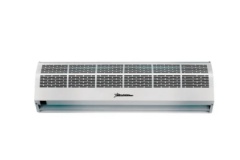
While air curtains consume electricity, they can help businesses and homeowners save energy in the long term. By improving temperature control and reducing the load on HVAC systems, air curtains make it easier to maintain a consistent internal environment, thus saving energy.
In environments where temperature regulation is critical—such as cold storage units or buildings with high foot traffic—air curtains help prevent heat loss and minimize the need for constant heating or cooling. By maintaining the desired indoor temperature, air curtains reduce the reliance on HVAC systems, which are typically responsible for significant energy consumption.
For example, in a retail environment, an air curtain can prevent warm air from entering through the entrance, which helps keep the space cool during summer months. This reduces the need for air conditioning and keeps electricity bills lower.
In larger commercial or industrial spaces, HVAC systems work more efficiently when air curtains are in place. Since air curtains help to maintain a stable indoor temperature, the HVAC system doesn’t have to work as hard to maintain comfort levels. This results in lower energy consumption overall.
Despite the initial power consumption, air curtains can help reduce your overall electricity costs by improving temperature regulation and making HVAC systems more efficient. By preventing warm or cold air from entering a building, air curtains help to reduce the amount of energy needed to heat or cool the space. This can lead to significant savings, especially in large commercial or industrial environments where energy consumption is a key concern.
Additionally, when air curtains are used in conjunction with other energy-saving measures (such as LED lighting, energy-efficient appliances, and improved insulation), the overall energy savings can be substantial.
In conclusion, the question of whether air curtains use a lot of electricity depends on several factors, including the size of the unit, its motor type, and its intended use. While larger units for industrial or commercial use may consume more electricity, modern air curtain models, especially energy-efficient ones, can help reduce overall energy consumption by improving temperature regulation and reducing the load on HVAC systems.
For businesses and homeowners looking to improve energy efficiency and maintain a comfortable indoor environment, air curtains are a worthwhile investment. At GZ THEODOOR TECH CO., LTD., we offer a wide range of energy-efficient air curtains designed to provide optimal performance while minimizing electricity usage. Our advanced air curtain models feature high-efficiency motors and customizable settings to ensure you get the most out of your investment without wasting energy.
Feel free to contact us to learn more about our products and how they can help you save on energy costs while improving your indoor comfort.
1. Do air curtains consume a lot of electricity?
The electricity consumption of air curtains depends on the size, motor type, and usage. Smaller, energy-efficient models consume less electricity, while larger units for industrial use may consume more.
2. How can I reduce the electricity cost of using air curtains?
Choose energy-efficient models with EC motors and adjustable settings to minimize energy use. Also, ensure they are used in the right environment to optimize performance.
3. Are air curtains worth the investment for energy savings?
Yes, air curtains can save energy by reducing the load on HVAC systems and improving temperature control, leading to long-term savings on electricity bills.
4. Can air curtains be used in both hot and cold environments?
Yes, air curtains are versatile and can be used in both hot and cold environments. They help maintain the indoor temperature by preventing external air from entering.


