


Views: 0 Author: Site Editor Publish Time: 2025-12-02 Origin: Site


Heated Air Curtain systems sit at the intersection of comfort, operating cost control and doorway performance. For facilities that face frequent door openings, cold air infiltration is one of the stealthiest drains on HVAC efficiency. GZ THEODOOR TECH CO., LTD., a high-technology enterprise specializing in energy-saving HVAC products, designs heated air curtains that pair robust airflow engineering with smart heating and control strategies to reduce heat loss and improve indoor comfort during winter months. This article walks through how heated air curtains work, when they make economic sense, how to measure their benefit, and which controls and operational modes matter most — all to help building operators estimate potential savings and make confident specification decisions.
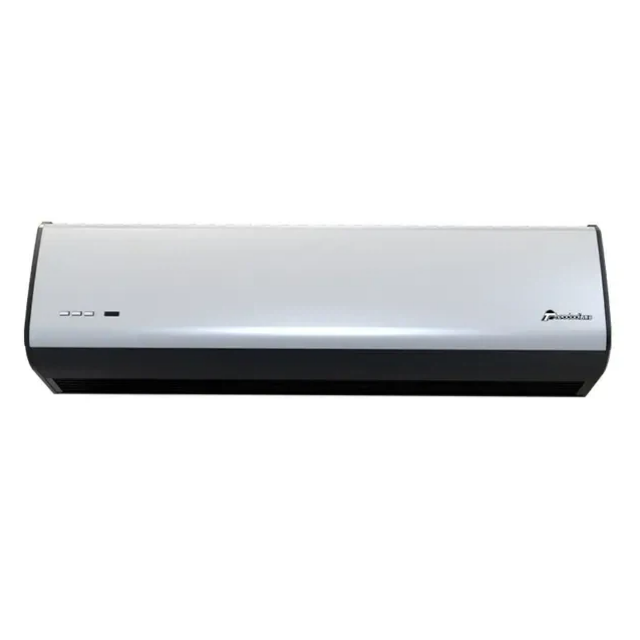
A heated air curtain is a device mounted above a doorway that delivers a high-velocity, laminar stream of air across the opening. The moving air forms an invisible barrier that limits exchange between inside and outside air. When heating is integrated into the unit, that air stream is warmed so the barrier not only limits convective exchange but also reduces the heat gradient that drives heat loss.
Two principal heating methods are used in commercial heated air curtains:
Electric-resistance coils are compact, responsive and easy to integrate. They heat the supply air quickly, making staged control and rapid response possible. Electric units are well-suited where retrofits are typical, where hydronic piping is impractical, or where a fast temperature response is required. Their main trade-offs are operating cost (electricity price dependent) and, in large installations, higher installed kW.
Hydronic coils use hot water from a building boiler or heat pump system to warm the air stream. Hydronic heated air curtains can be more energy-efficient when low-cost or already available heat (e.g., from a central plant or a heat-recovery loop) is present. They tend to have lower electrical draw and are excellent for continuous operation in larger facilities. However, hydronic systems require piping and plumbing integration, which can raise installation complexity and upfront cost.
A non-heated air curtain reduces infiltration by momentum; the moving air opposes incoming drafts. Adding heat reduces the temperature difference across the doorway, lowering conductive and radiant losses and improving occupant comfort near entrances. In winter, heated discharge air discourages cold downdrafts and reduces the need for adjacent space heating to compensate for large transient cold spikes.
Heated air curtains are not a universal solution. Their value depends on climate, building operation and door usage patterns.
Cold climates with frequent door openings: Warehouses, loading docks, supermarket entrances, and transit stations where doors cycle often benefit significantly because the unit reduces repeated heat losses.
High foot-traffic retail and commercial doors: Frequent in-and-out traffic creates constant air exchange; adding heat preserves indoor comfort without large cyclic strain on the primary HVAC.
Vestibule replacement or constrained vestibule space: In older buildings where installing or enlarging vestibules is impossible, a heated air curtain can substitute as an effective thermal barrier.
Spaces with localized comfort needs near doors: Reception areas, close-by office zones or server rooms adjacent to loading doors where localized temperature control matters.
Mild climates or buildings with rare door openings: If exterior exposure is limited or door cycles are infrequent, the incremental energy used to heat the discharge air may exceed savings from reduced infiltration.
Well-sealed vestibules with minimal leakage: A properly designed vestibule or airlock already provides two-stage separation; adding heating to an air curtain offers little extra benefit.
Poorly integrated HVAC systems: If the building’s heating plant is inefficient or its controls are incompatible, adding heated curtains without a system-level strategy can produce disappointing results.
Quantifying savings requires moving beyond gut feel to metrics that capture actual performance.
ΔT at the doorway: Measure the indoor-outdoor temperature difference during typical door cycles. Heated curtains reduce the effective ΔT seen by the HVAC system during openings.
Door open frequency and duration: Energy savings scale with how often and how long doors are open. A unit that runs constantly but only offsets rare door openings will not pay back.
Airflow momentum and coverage: The curtain must deliver adequate volumetric flow and velocity across the entire opening. Gaps or inadequate momentum let cold air bypass the curtain, eroding savings.
Interaction with HVAC setbacks and staging: If the central plant is aggressively setback during unoccupied hours, a heated air curtain that prevents space-wide temperature drops can reduce start-up fuel or runtime when occupants return.
Before-and-after energy monitoring: Compare heating energy consumption for the conditioned space over comparable periods (correcting for weather via heating degree days). This method captures real building-level effects.
Short-term thermal response tests: Use temperature sensors at several points near the door and hall the inside space to record transient temperature dips during door cycles with and without the heated curtain operating.
Comfort and operational metrics: Measure occupant thermal comfort near the entrance and track HVAC cycling frequency. Reduced boiler/furnace cycling and fewer thermostat overrides are valuable operational wins.
In true winter conditions, heated air curtains commonly reduce transient heat loss events and stabilize zone temperatures near doors. Energy reductions can come both from reduced heater runtime (less recovery required after a cold ingress) and from reduced auxiliary heating at perimeter areas. The magnitude depends on the factors above; in high-traffic cold climates the effect can be substantial.
The efficiency and safety of a heated air curtain rest heavily on its controls and operational modes. Intelligent control strategies maximize benefit while limiting unnecessary heat input.
Staged heating allows the unit to provide only as much heat as required. For instance:
Low fan/high heat at very cold temperatures for maximum thermal separation.
High fan/low heat when temperature difference is smaller but momentum is needed for windy conditions.
A reliable thermostat tied to the discharge coil enables automatic staging and reduces on-off cycling that wastes energy and shortens component life.
Door sensors and occupancy inputs allow the curtain to ramp only when the doorway is in active use, especially valuable for entrances that see intermittent traffic.
Presence sensors combined with predictive algorithms can bring the unit up to operating conditions just before peak entry times, minimizing needless runtime.
Safe operation includes flame/overheat cutouts for electric coils, water flow switches for hydronic coils, and safeguards against freezing in outdoor-exposed piping. Interlocks with fire systems and smoke control ensure the curtain doesn’t interfere with emergency ventilation strategies.
Integration with building automation systems (BAS) enables schedule-based operation, demand response participation, and coordinated control with HVAC setbacks. When the curtain is treated as part of the zone control strategy, it becomes a tool for demand shaping rather than a standalone heater.
GZ THEODOOR TECH CO., LTD. offers a line of heated air curtains tailored for winter performance and energy-conscious operation. Our models are available with electric or hydronic coils and a set of flexible control packages.
Optimized nozzle geometry: Ensures laminar, coherent flow across wide openings to minimize bypass and maximize barrier effectiveness.
Staged heating modules: Multiple heating stages enable low-watt preheat and higher-watt recovery stages, lowering average operating power while maintaining comfort.
Modulating fan speed: Variable-speed fans allow momentum to be tuned to door width and prevailing wind conditions, reducing noise and energy compared with fixed-speed alternatives.
Plug-and-play or BAS-ready controls: Choose from a simple wall thermostat and door sensor package up to full BACnet/Modbus integration for centralized scheduling and energy optimization.
Hydronic-ready coils and freeze protection: For hydronic systems we provide coil designs that integrate with low-temperature plant operation and include proper freeze protection strategies.
Proper mounting height and nozzle alignment are critical — our technical team provides templates and field-support guidance during installation. Routine maintenance is straightforward: filter checks, blower wheel cleaning and control verification keep units performing at spec for years.
A properly selected and controlled heated air curtain delivers measurable winter energy savings, improved occupant comfort, and longer equipment life. The combination of warm air discharge and powerful airflow effectively limits infiltration, reduces HVAC strain, and maintains consistent interior conditions. Whether applied in retail stores, logistics centers, or public buildings, heated air curtains from GZ THEODOOR TECH CO., LTD. offer a cost-effective way to upgrade energy performance without compromising accessibility. To evaluate the potential impact in your facility, document door usage patterns, compare heating energy before and after installation, and select a model matched to your climate and traffic level. For expert assistance, technical support, and customized sizing advice, reach out to GZ THEODOOR TECH today. Our engineers can help you specify heated units that maximize winter comfort and efficiency — contact us to schedule a free performance assessment or demonstration tailored to your building’s needs.


