


Views: 0 Author: Site Editor Publish Time: 2025-11-17 Origin: Site


Industrial Air Curtain play a quiet but powerful role in modern manufacturing and logistics facilities. In one short paragraph: GZ THEODOOR TECH CO.,LTD. designs and manufactures heavy-duty air curtains that help factories protect process zones, stabilize production environments and lower energy consumption—this article explains how an industrial air curtain does that, what features to look for, and how to evaluate lifecycle value for your plant.
An industrial air curtain is built for continuous, heavy-duty use in demanding environments where ordinary commercial units would fail or deliver only limited value. Key characteristics include:
Industrial units use larger motors and robust fan assemblies capable of producing high-velocity, coherent air jets across wide door openings. Motors may be specified in service classes for continuous operation; choices between traditional AC motors and electronically commutated (EC) motors affect efficiency, control resolution and maintenance intervals.
Unlike retail or light-commercial models sized for single doors, industrial air curtains are available in much wider modules and can be ganged together for docks and long bay openings. Modular designs simplify installation for irregular openings and facilitate on-site service.
Housings are constructed from thicker-gauge steel or corrosion-resistant alloys and finished with industrial coatings. Optional features include explosion-proof components, stainless or galvanized internals for corrosive atmospheres, and IP-rated enclosures in wet or dusty sites.
Industrial units often include multi-stage filtration (to keep production air clean), optional heating or recirculation modes, and advanced controls to link to building management systems (BMS), access control, or dock sensors. Integration options are important where contamination control or temperature-sensitive processes exist.
Industrial air curtains deliver measurable improvements across operations. Here are six benefits that have direct effects on production quality, safety and operating costs.
Air barriers prevent uncontrolled warm or cold air infiltration at production doors and loading bays. For temperature-sensitive processes—such as curing, coating, food processing or cold-chain handling—an effective air curtain reduces thermal shock and helps maintain consistent process conditions, which improves yield and reduces scrap.
A focused, high-velocity air stream acts as a protective barrier, reducing the ingress of dust, airborne particulates, pests and combustion byproducts. In environments where particulate contamination can compromise product integrity (pharma, electronics, food), this contamination control extends filter life on downstream equipment and reduces the burden on HVAC filtration systems.
By minimizing uncontrolled air exchange, air curtains reduce the load on HVAC systems. Less heating or cooling lost through doors means fewer compressor starts, longer equipment life, and reduced peak demand. For facilities with multiple dock doors or frequent door cycles, the cumulative energy savings can be substantial—especially when coupled with EC motors and demand-driven controls.
Drafts, extreme cold/warmth near doorways and gusts from exterior doors can reduce worker comfort and increase fatigue. A properly sized air curtain creates a stable threshold that improves local comfort, and when integrated with sensors, can prevent dangerous pressure differentials or sudden airflow swings that interfere with overhead cranes or material handling equipment.
Many plants maintain specific pressure relationships between rooms (e.g., positive pressure in clean areas, negative pressure in chemical handling zones). Industrial air curtains can be tuned and coordinated with ventilation systems to help preserve these pressure differentials while allowing efficient material and personnel movement.
Industrial-grade units may include features that interact with fire and smoke control systems—such as fail-safe blowers, automatic shutdowns, or selectable modes that support smoke extraction strategies. Integration ensures the air curtain contributes to, rather than interferes with, emergency responses.
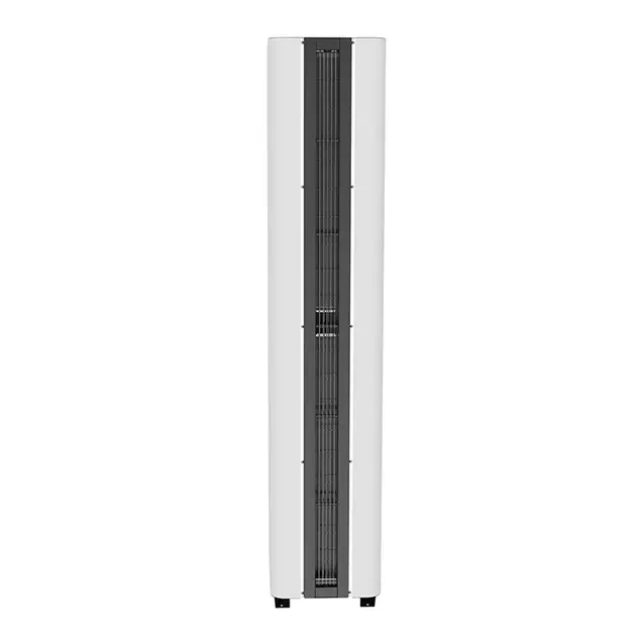
When evaluating where to install an industrial air curtain, real-world site conditions should drive product selection.
High-traffic forklift corridors, frequent dock openings and large gateway widths require stronger, broader air jets and sturdy mounting. Consider door cycle rates: loading docks that open dozens of times per hour need units designed for continuous duty and easy access for service.
Docks exposed to prevailing winds, rain, snow or temperature extremes demand specialized options—enclosures with higher ingress protection, heated airstreams for winter operations, or deflectors to maintain jet coherence in crosswinds.
If the external environment contains salts, acids, or dust-laden air, specify corrosion-resistant materials and coatings, sealed bearings and accessible filtration. For explosive atmospheres, select explosion-proof-rated motors and enclosures certified by relevant safety bodies.
Total cost of ownership (TCO) for air curtains leans heavily on maintenance strategy and component choices.
Establish a simple preventive schedule for inspecting and replacing filters, cleaning impellers and checking belts or couplings. Filters that trap external dust protect production air but must be replaced on a predictable cadence to avoid airflow degradation.
AC motors are robust and familiar to maintenance teams; EC motors deliver higher efficiency, better speed control and reduced electrical consumption. While EC units can have a higher initial cost, their improved part-load efficiency and controllability often shorten payback periods in high-cycle applications.
Choose units with service-friendly access panels, standard bearing sizes and sealed electrical connections. These choices reduce mean time to repair (MTTR) and reduce downtime during routine maintenance.
Install metering or integrate the unit with the BMS to track runtime, energy consumption and door-open events. Monitoring enables straightforward energy-savings calculations and supports continuous improvement programs.
Selecting the correct model means balancing compliance, functionality and return on investment.
Food & beverage: stainless internals, NSF-friendly finishes, washable housings and positive-pressure support.
Pharma/electronics: tight air jets, HEPA-compatible interfaces, coordination with cleanroom pressure control.
Logistics/cold chain: heated airstream options, high-velocity modules for wide docks, fast-responding controls.
Chemical/exhaustive environments: corrosion-resistant alloys, sealed motors, explosion-proof certifications.
A high-level payback approach compares incremental purchase + installation cost to annual savings from reduced HVAC energy, lower filter and equipment wear, fewer product rejects and reduced downtime. Estimate annual energy savings conservatively, add reduced HVAC maintenance and quality improvements, then divide total incremental cost by annual net savings to get payback years. (This approach is a planning tool—site measurements deliver final numbers.)
GZ THEODOOR TECH CO.,LTD. manufactures a range of industrial models that address heavy-duty interiors, dock-heavy logistics centers and specialized processing environments. Theodoor’s product development emphasizes energy-saving motor choices, modular widths and durable housings tailored to global export markets. The company pairs products with commissioning support to ensure units are tuned to door geometry, traffic patterns and building systems.
A successful program combines correct selection with careful commissioning and ongoing maintenance:
Commission with the door in normal operating patterns; validate jet coherence and adjust nozzle angles.
Use sensors for demand-driven operation—run at full power during openings and scale back between cycles.
Document filter replacement, motor inspection and bearing lubrication in a simple log that ties to your preventive maintenance system.
Train local technicians on basic troubleshooting (fan balance, electrical safety, and filter replacement) and keep an OEM parts list on file.
Ensure your chosen air curtain complies with local electrical codes, emissions and workplace safety standards. In sensitive industries, specify materials and finishes to meet sanitation standards (e.g., for food contact areas) and consult with safety engineers when integrating with fire alarm and smoke control systems.
Before you place an order, gather the following details for a smooth specification: door height and width, typical opening frequency, prevailing wind or external exposure, required environmental class (corrosive, explosive, cleanroom), building pressure strategy, whether heating is required, desired motor type (AC/EC), integration needs with BMS or fire systems, and preferred lead times for installation and commissioning.
Industrial air curtains are a cost-effective, low-footprint way to stabilize process environments, reduce HVAC load, improve product quality and raise worker comfort in high-traffic manufacturing and logistics facilities. GZ THEODOOR TECH CO.,LTD. combines heavy-duty design with energy-saving options to meet demanding site conditions—if you want to explore how an air curtain systems solution could fit your plant, contact us for tailored guidance and product information. Contact us today to request industry-specific spec sheets, commissioning support or lifecycle cost assistance.


