


Views: 0 Author: Site Editor Publish Time: 2025-11-10 Origin: Site


If you want a better way to heat water, try a heat pump water heater. You can save money because these heaters use about half the energy of old electric heaters. Many families pay less for bills and worry less about hurting the environment.
| Advantage | Description |
|---|---|
| Efficiency | HPWHs work four times better than regular gas and electric water heaters. |
| Carbon Emissions Reduction | Switching to electric HPWHs could lower carbon by almost 100 million tons. |
| Energy Storage Capability | HPWHs can keep energy from renewable sources for later, which helps manage energy. |
You can choose an energy star certified heater. You will get more comfort, waste less, and always have hot water. Think about what is most important to you—saving money, saving energy, or saving time.
Heat pump water heaters use about half the energy of old electric heaters. This means you can save a lot on your utility bills. Switching to a heat pump water heater can cut carbon emissions by up to 2,000 pounds each year. This makes it a good choice for the environment. These heaters can help families save between $200 and $550 every year. Most people get their money back in 7 to 10 years. Modern heat pump water heaters have smart features. You can control settings and check energy use easily. Picking an ENERGY STAR certified model gives you better efficiency. You might also get local rebates, which helps you save even more.
A heat pump water heater heats water in a clever way. It does not make heat by itself. It moves heat from the air into the water tank. The heater has three main parts: an evaporator, a compressor, and a condenser. The evaporator takes in warm air and gets its heat. The compressor squeezes the refrigerant and makes it hotter. The condenser puts this heat into the water.
This method uses thermodynamics. The refrigerant grabs heat from the air. The compressor makes the heat stronger. The condenser sends the heat to your water. Most energy comes from the air, so the heater uses less electricity than old heaters. You get hot water by using the warmth in your house or garage.
Tip: A heat pump water heater works best in places that are not too cold. You can put it in a basement, garage, or utility room for good results.
You will save a lot of money with a heat pump water heater. This water heater is two to three times more efficient than a regular electric water heater. It can be six to seven times more efficient than a gas water heater. The energy factor shows how well a heater turns energy into hot water. These heaters can have an energy factor up to 3.5. Old electric heaters usually have less than 1.
Heat pump water heaters can save you about $550 each year on energy bills.
ENERGY STAR certified models use less electricity, so you pay less every month.
You help the planet by using less energy and making less pollution.
If you want a smart and reliable way to heat water, pick an ENERGY STAR certified heat pump water heater. You will pay less for bills, always have hot water, and help the environment. This is a great choice for anyone who wants better energy use at home.
You want to see real changes in your monthly expenses. When you switch to a heat pump water heater, you notice lower bills almost right away. This type of heater uses much less energy than old gas or electric models. Many families report bill savings between $100 and $300 each year. Some even save more, depending on their home and water use.
One user shared, “I saved about $120 per year after switching from a natural gas water heater to a heat pump water heater.”
Your location also affects your bill savings. If you live in an area with high electricity rates, your savings can be even bigger. Some experts say that if electricity rates matched the real cost of service, you could save hundreds of dollars more each year compared to using natural gas. Local rebates and special rates can help you save even more on your monthly bills.
You might notice that installation costs for a heat pump water heater are higher than for a regular water heater. The price depends on the model and where you live. Here is a quick look at average costs:
| Type of Water Heater | Average Upfront Cost |
|---|---|
| Heat Pump Water Heater | $1,200 - $5,000 |
| Traditional Water Heater | $600 - $7,200 |
Even though installation costs can seem high, you get steady bill savings over time. Most families see the extra money they spend returned in about 7 to 10 years. Here is what you can expect:
The payback time for a heat pump water heater usually ranges from 7 to 10 years.
An average family of four can save between $200 and $550 each year in bill savings.
Your total savings depend on your current water heater and local energy prices.
If you choose an energy star certified model, you can boost your bill savings even more. Rebates and incentives can also lower your installation costs. Over time, you will see that the investment pays off, and you enjoy reliable hot water with less worry about high bills.
You help the planet when you pick a heat pump water heater. This heater makes much less carbon pollution than old ones. When you switch, you cut down carbon dioxide by 1,000 to 2,000 pounds each year. The table below shows how much carbon you can save every year:
| Source | CO2 Emissions Reduction (per year) |
|---|---|
| Cleantechnica | 1 ton (about 2,000 pounds) |
| New Buildings Institute | 2,000 pounds |
| Michigan | 0.6 tons (544 kg) |
| Vermont | 0.9 tons (816 kg) |
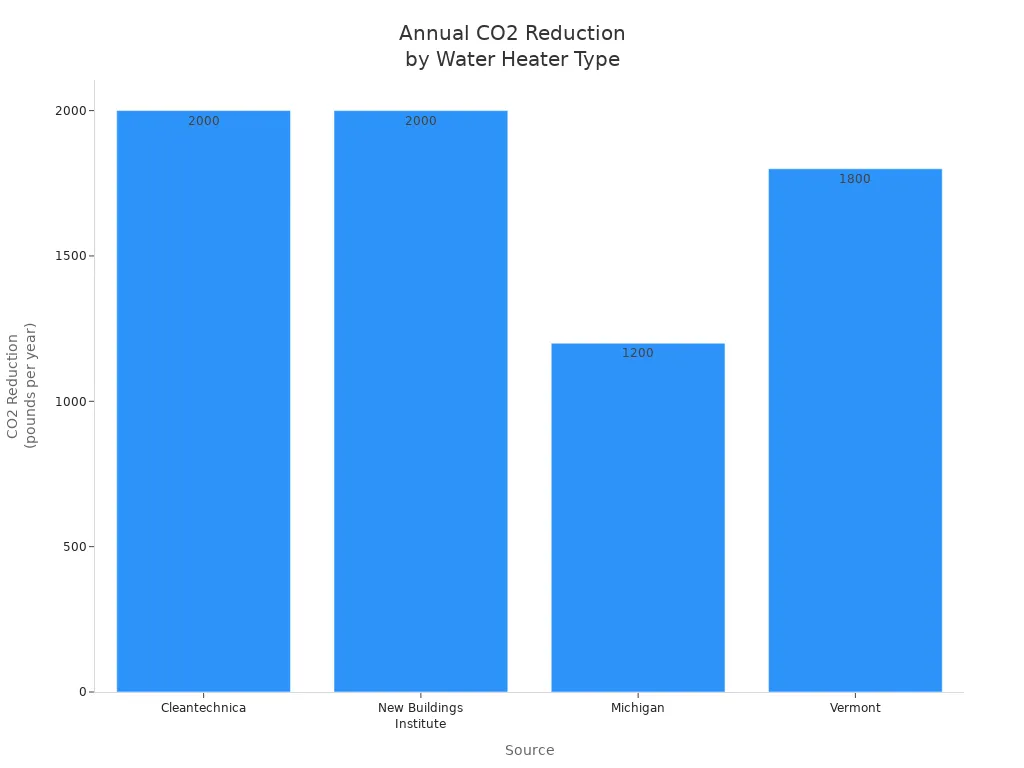
You can lower your home’s carbon pollution by about 60% in the first year. This is almost 3.9 metric tons of carbon dioxide. Using less energy helps make the air cleaner and keeps people healthier. You save money and help make the world cleaner.
A heat pump water heater helps your home be more green. You use about 60% less electricity than with old heaters. This means you use less energy and make fewer greenhouse gases. The heater moves heat from the air instead of burning fuel or using lots of electricity. You get hot water when you need it. The heater can also help dry out your basement or utility room.
Many models have eco-labels and certifications for safety and the environment. Here are some common certifications:
| Certification | Description |
|---|---|
| CE | Shows the product meets health, safety, and environmental rules in Europe. |
| EMC | Makes sure electrical equipment does not cause interference. |
| RoHS | Limits harmful materials in electrical products. |
| LVD | Checks that electrical equipment is safe to use. |
| EMD | Relates to how well energy-using products work. |
| RED | Relates to wireless device rules. |
| ISO9001 | Quality management system standard. |
| ISO14001 | Environmental management system standard. |
| ISO45001 | Health and safety management system standard. |
ENERGY STAR certified models help you save energy and protect nature.
You help make a cleaner future for your family and your community.
Picking a heat pump water heater helps you live in a greener way.
You want hot water when you need it. Heat pump water heaters give steady hot water for most daily needs. They work best if you pick the right size for your home. The right size means enough hot water for showers, dishes, and laundry. Sometimes, if many people use hot water at once, you might wait a bit for it to heat up again. This happens because these heaters save energy.
Here is a quick look at how heat pump water heaters and traditional heaters compare when many people need hot water:
| Heater Type | Reliability During High Demand | Efficiency |
|---|---|---|
| Heat Pump Water Heater | May have limitations | High energy efficiency |
| Traditional Heaters | More reliable | Varies by model |
Some common problems with hot water supply are:
Not enough hot water (often from picking a heater that is too small)
Electric element stops working
Circuit breaker trips
Thermostat does not work right
Tip: Pick the right size for your family. This helps you always have enough hot water.
Modern heat pump water heaters have smart features that make life easier. Many models have WiFi, so you can control your heater with your phone. You can change the temperature, set a schedule, and see how much energy you use.
| Model | Features |
|---|---|
| Bradford White AeroTherm® | App control, Wi-Fi, Bluetooth, scheduling, energy tracking |
| ProLine® XE Voltex® | Smart Grid Ready, remote control |
| NWP500 Series | Built-in Wi-Fi, remote monitoring and control |
You also get digital controls. These let you pick different modes, like vacation or high-demand, and see your energy use. Traditional heaters only have simple manual controls.
| Feature | Heat Pump Water Heaters | Traditional Water Heaters |
|---|---|---|
| Control Options | Digital panel, remote management | Basic manual controls |
| Flexibility | Adjustable settings, multiple modes | Limited settings |
| Connectivity | WiFi, grid-ready | None |
| Performance Tracking | Yes | Minimal |
Maintenance is easy. You need to flush the tank and check the anode rod once a year. You also clean the filter, which is simple.
| Maintenance Task | Heat Pump Water Heaters | Traditional Water Heaters |
|---|---|---|
| Annual Flushing | Yes | Yes |
| Anode Rod Inspection | Yes | No |
| Filter Cleaning | Yes | No |
Heat pump water heaters last longer than most old heaters. Air source models last about 15 years. Ground source models can last up to 50 years.
| Water Heater Type | Average Lifespan |
|---|---|
| Conventional Electric | 10 to 15 years |
| Conventional Gas | 8 to 12 years |
| Heat Pump (Air Source) | Roughly 15 years |
| Heat Pump (Ground Source) | 25 to 50 years |
️ You get a water heater that is smart, simple to use, and made to last.
You get lots of good things when you pick a heat pump water heater. Many people choose these heaters for saving energy, saving money, and helping the planet.
| Reason | Description |
|---|---|
| Energy Efficiency | Uses much less energy than old electric heaters. |
| Cost Savings | Makes bills lower and can get you rebates or credits. |
| Eco-Friendly | Cuts down pollution and helps make the future cleaner. |
Most people say they are happy with their new heater. If you want to get one, look up ENERGY STAR models, find local rebates, and ask a trusted installer for help.
You will hear a soft humming sound, like a refrigerator. Most models run at about 45-55 decibels. You can install the heater in a basement or garage to keep noise away from living spaces.
You can use these heaters in cold places, but they work best in mild temperatures. For very cold areas, choose a hybrid model or install the heater in a heated space for better performance.
You should check the filter and clean it every few months. Once a year, flush the tank and inspect the anode rod. Regular care helps your heater last longer and work better.
A heat pump water heater needs electricity to run. During a power outage, it will not heat new water. You can still use the hot water stored in the tank until it runs out.


