


Views: 0 Author: Site Editor Publish Time: 2026-07-13 Origin: Site


The commercial plumbing landscape is experiencing a massive transformation right now. Decarbonization mandates, soaring utility expenses, and strict Department of Energy (DOE) efficiency regulations compel engineers to rethink traditional designs. Facilities can no longer rely on outdated, energy-intensive equipment. Building owners must adopt smarter electrification strategies to remain compliant and profitable.
Transitioning your building to a heat pump water heater is never a simple one-to-one replacement for conventional gas boilers. These advanced units require a highly calculated approach. You must evaluate equipment sizing, electrical panel capacity, and thermal storage volumes simultaneously. Neglecting these engineering variables often leads to operational failures, system lockouts, and cold showers for end-users.
This article provides a pragmatic, evidence-based framework for evaluating modern water heating technologies. You will learn how to properly size systems, mitigate installation risks, and choose the ideal commercial unit for your infrastructure constraints. We explore practical strategies to help you ensure peak performance, secure utility rebates, and achieve seamless integration.
Upgrading mechanical infrastructure requires rigorous financial and regulatory justification. Facilities must frame the business problem correctly before evaluating hardware. You need clear success criteria to measure project viability.
Local benchmarking laws act as the primary catalyst for commercial electrification. In New York City, Local Law 97 imposes steep financial penalties on buildings exceeding specific carbon emission thresholds. You cannot easily meet these stringent limits using standard natural gas boilers. Similarly, California’s Title 24 energy code strongly incentivizes heat pump technology for domestic water heating.
Many municipalities are completely phasing out new gas hookups. Engineers designing new commercial builds must plan for fully electrified mechanical rooms. Retrofitting older buildings presents tighter deadlines as penalties compound annually. Deciding to install an energy efficient heater has shifted from a voluntary green initiative to a critical compliance strategy.
Heat pumps demand significantly higher initial capital expenditure (CapEx) compared to standard gas heaters. However, they drastically slash monthly operational expenditure (OpEx) by moving heat rather than generating it. Facility managers must look past the initial price tag.
You must include transparent assumptions about utility rate inflation in your financial models. Electricity and natural gas prices rarely remain static. If you assume a three percent annual increase in energy costs, the long-term operational savings become undeniable. These recurring savings offset the higher equipment costs over the system lifecycle.
Common Mistake: Evaluating the equipment purchase price without projecting the ten-year energy expenditure often leads to poor procurement decisions.
Government and utility incentives directly compress your financial payback period. You should actively target ENERGY STAR certified models to qualify for maximum funding. Local utilities frequently offer prescriptive rebates based on total heating capacity or storage volume.
State-level decarbonization programs also provide custom incentives for complex engineering projects. These financial levers make electrification highly competitive. Always consult a rebate specialist before finalizing your purchase order to capture every available dollar.
No two commercial buildings possess identical mechanical footprints. Selecting the right architecture dictates long-term success. You must match the system configuration to your specific load profile and spatial constraints.
Manufacturers divide air-source systems into two distinct categories. You must weigh their respective spatial and operational requirements.
Most commercial retrofits utilize standard air-source technology. They absorb latent heat from ambient air and transfer it into the domestic water supply. They remain highly reliable across diverse climates.
Conversely, water-source systems recover rejected heat from an existing commercial hot water system or chilled water loop. They offer unparalleled efficiency. A hospital or large hotel can pull waste heat from its cooling tower loop and dump it directly into the domestic water supply. This provides simultaneous heating and cooling benefits, maximizing utility savings.
The following comparison table illustrates the primary operational differences between system architectures.
| Configuration Type | Primary Heat Source | Ideal Facility Application | Space Requirement |
|---|---|---|---|
| Integrated Air-Source | Indoor Ambient Air | Small offices, mid-size retail | High cubic air volume needed indoors |
| Split Air-Source | Outdoor Ambient Air | Multi-family housing, schools | Outdoor pad space, indoor tank room |
| Water-Source Recovery | Chiller Loop / Waste Water | Hospitals, large hotels, data centers | Proximity to existing chiller infrastructure |
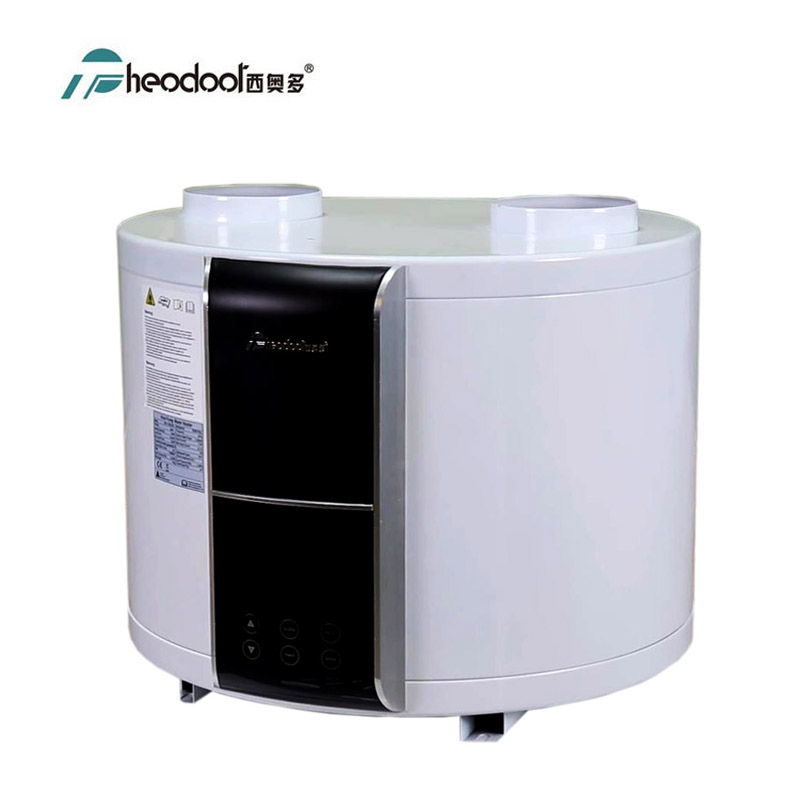
Technical evaluation goes far beyond checking a spec sheet. You must align the equipment capabilities with your real-world operational demands. Understanding performance metrics prevents catastrophic sizing errors.
The Coefficient of Performance measures heating efficiency. A COP of 3.0 means the unit produces three units of heat for every one unit of electricity consumed. You must understand how this metric fluctuates wildly in real-world environments.
Incoming municipal water temperatures and ambient air temperatures dictate actual COP. Winter conditions drop the COP significantly. You must warn your engineering team against relying solely on optimal factory test ratings. Manufacturers test units in perfect climate-controlled laboratories. You must request derated performance curves reflecting your specific geographic climate constraints.
This represents the most critical sizing shift in commercial plumbing design. Gas burners recover hot water rapidly. Heat pumps recover hot water slowly. You cannot size them using legacy gas methodologies.
Facilities must offset this slower recovery speed by installing vastly larger storage tank capacities. You need enough stored hot water to handle intense morning or evening peak draw periods. Once the storage depletes, the heat pump water heater unit cannot catch up quickly. Massive thermal storage serves as your primary operational buffer.
Commercial buildings cannot tolerate hot water outages. You must engineer redundancy into your mechanical design. Relying on a single massive compressor invites catastrophic failure risks.
Best Practice: Cascade multiple smaller units together. If one compressor fails, the others continue serving the building load. Furthermore, you should strongly consider hybrid systems. Using the heat pump as the primary source while keeping electric resistance or gas heaters as emergency backup ensures uninterrupted service during extreme weather anomalies.
Paper designs often clash with mechanical room realities. Uncovering hidden installation costs early prevents budget overruns. You must assess infrastructure limitations before purchasing equipment.
Replacing standard gas systems often triggers unexpected electrical upgrades. Gas heaters use minimal electrical amperage merely to run control boards and small draft fans. A modern heat pump water heater relies entirely on electrical power.
You must evaluate your existing electrical panel capacity immediately. High-capacity compressors and their backup electric resistance elements pull heavy loads. Facilities frequently discover they need expensive transformer upgrades or entirely new electrical panels. Factor these electrical contracting costs into your initial project budget.
Air-source technology extracts heat from the air and discharges cold, dehumidified exhaust. This thermal byproduct significantly impacts your building environment. You must manage this exhaust carefully.
Dumping icy air into a closed mechanical room creates severe overcooling risks. It can freeze adjacent water pipes or severely diminish the heat pump's own efficiency. Assess the cost of ducting this exhaust air completely outside the building. Ductwork routing often introduces complex architectural challenges in dense urban retrofits.
Because these systems require massive storage volumes, footprint requirements expand drastically. Larger tanks consume valuable square footage. They also introduce severe structural challenges.
Water weighs roughly 8.34 pounds per gallon. Adding thousands of gallons of storage tests the structural integrity of your floor slabs. Highlight these structural considerations early, especially in rooftop installations or older retrofit scenarios. You may need a structural engineer to reinforce the concrete before the tanks arrive on site.
Equipment procurement involves entering a long-term partnership with a manufacturer. You are buying a decade of operational support, not just a metal box. Vendor shortlisting requires aggressive vetting.
Modern commercial buildings rely heavily on Building Management Systems (BMS). Evaluate the equipment's native ability to communicate via BACnet or Modbus protocols. Seamless integration is non-negotiable.
Your facility managers need real-time monitoring capabilities. They must track temperature setpoints, compressor run hours, and fault codes remotely. Deep integration also enables smart peak-load shedding. The BMS can force the heaters to run during off-peak electrical rate hours, maximizing financial savings.
Commercial warranties vary wildly between manufacturers. You must scrutinize the fine print. Outline clear expectations regarding coverage for the compressor circuit versus the storage tank itself.
Choosing an OEM water heater partner with a robust, localized supply chain is vital. When a sensor fails on a Friday night, you cannot wait three weeks for international shipping. Interview their local distributor network. Verify they keep critical replacement parts stocked in regional warehouses.
Do not guess at your thermal loads. We recommend initiating a pilot site energy audit immediately. Hire a specialized MEP engineering firm to conduct a comprehensive sizing analysis. They will map your peak draw profiles and verify electrical ampacity before you commit to a specific manufacturer. This measured approach guarantees project success.
A commercial heat pump water heater represents a highly effective, compliance-ready solution for modern facilities. When engineered correctly, these systems slash carbon emissions and stabilize long-term utility expenses. However, success requires acknowledging the fundamental shift in sizing methodology, prioritizing thermal storage, and mitigating spatial constraints.
We encourage facility engineers and building owners to take immediate action. Consult with a qualified professional to audit your current hot water infrastructure. Proactive planning ensures you capture maximum utility rebates while keeping your building compliant with evolving energy codes.
A: Yes, but it requires careful engineering. Cold climates reduce the Coefficient of Performance (COP). Facilities must specify low-ambient models designed specifically for freezing temperatures. Additionally, engineers typically deploy split systems or integrate hybrid electric resistance backup heaters. This ensures the building never loses hot water during extreme winter vortex events.
A: Integrated air-source units require massive air volume. A general industry guideline dictates roughly 1,000 cubic feet of surrounding air per ton of heating capacity. Without adequate space or proper exterior ducting, the unit will drastically overcool the mechanical room. This can cause the equipment to freeze itself out of operation.
A: The commercial industry average ranges from 10 to 15 years. Lifespan depends heavily on strict routine maintenance. Facility teams must regularly clean the evaporator coils to maintain airflow efficiency. Furthermore, replacing sacrificial anode rods inside the storage tanks prevents premature corrosion and extends the overall lifecycle of the investment.
A: Sometimes. While split systems can pair with existing storage, you must evaluate the current tank thoroughly. You need to inspect the tank's insulation rating and port configurations. High-efficiency heat pumps often require specific stratification control and multiple recirculation ports to ensure optimal performance and compatibility.


