


Views: 0 Author: Site Editor Publish Time: 2026-10-04 Origin: Site


Loading dock environments present intense operational challenges daily. You constantly battle frequent door cycles, rapid temperature loss, persistent pest ingress, and strong wind shear. Installing an air curtain offers a proven mitigation strategy to protect these critical openings. However, its efficacy drops dramatically if you install a mis-sized unit. An undersized system completely fails to seal the floor against outside elements. Conversely, an oversized unit creates excessive noise, wastes electrical power, and generates uncomfortable updrafts for your staff. We wrote this guide to provide a strict, engineering-aligned framework for sizing your equipment. You will learn how to confidently evaluate specifications and avoid common installation pitfalls. Facility managers and buyers will gain the exact knowledge needed to request accurate quotes. Proper sizing guarantees optimal dock performance and immediate energy savings.
Selecting the wrong equipment size leads to immediate operational failures. Many buyers guess their requirements based on general warehouse dimensions. This guesswork creates expensive problems down the line. You must understand the specific risks associated with both undersizing and oversizing your loading dock air curtain before making a purchase decision.
Buying a unit too small for your opening guarantees poor performance. The primary risk involves a complete floor-level breach. The air stream must reach the concrete floor to create a proper seal. If the air dissipates before hitting the ground, outside wind rushes inside. Dust, debris, and flying pests easily bypass the weakened barrier entirely. Your facility remains exposed to the elements.
Undersizing also creates a false economy. Buyers sometimes purchase a commercial-grade unit for an industrial application to save upfront money. This approach always fails. The smaller motor runs constantly trying to overcome severe drafts. It quickly overheats and burns out prematurely. You achieve zero energy savings while facing expensive replacement costs shortly after installation.
Common Mistake: Relying on maximum velocity ratings rather than floor-level velocity ratings. A small motor might produce high speeds at the nozzle, but it loses momentum halfway down a tall dock door.
Bigger does not always mean better in airflow engineering. Excessive high-velocity air creates turbulent conditions for your dock workers. It blows paperwork around and can scatter lightweight packaging across the staging area. Your staff will eventually turn the machine off to avoid the discomfort. An inactive machine provides zero protection.
Oversizing also leads to massive CapEx and OpEx waste. Larger motors require heavier structural supports and complex wall reinforcement. They demand larger electrical services, often requiring expensive sub-panel upgrades. Furthermore, running a massive motor unnecessarily drives up your monthly power costs. You end up paying for performance you simply do not need.
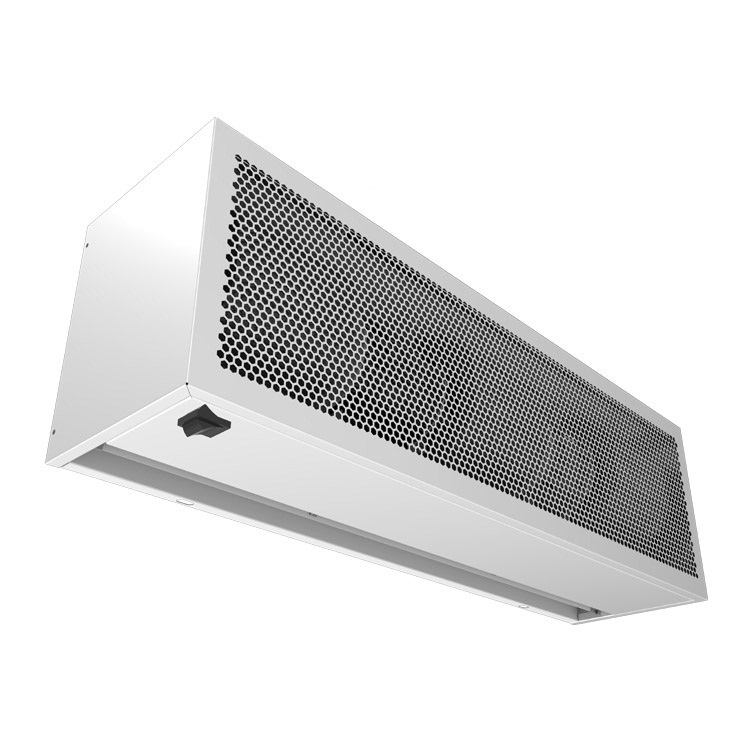
Accurate physical measurements form the foundation of proper equipment sizing. You cannot rely on original architectural blueprints. Over time, contractors modify door tracks, add bumper pads, or alter structural framing. Grab a reliable steel tape measure. You need to physically verify two specific dimensions on site.
First, measure the inside dimension of your door opening. Measure from the left inner jamb straight across to the right inner jamb. Do not measure the door itself, as track overlap can skew your numbers.
Apply a strict rule of thumb here. The unit must be exactly as wide as the opening or overlap it by one to three inches on each side. Overlap prevents lateral air leaks at the corners. If a single unit isn't wide enough for an oversized bay, you must buy multiple units. You bolt them together seamlessly to form a continuous barrier. Gaps between multiple units destroy the entire air seal.
Next, determine the exact mounting height. Measure from the spot where you will bolt the bracket straight down to the floor. Do not simply measure the clear opening height. Your mounting spot often sits several inches or even a foot above the actual door hardware.
This measurement acts as your most critical variable. Sizing tables are strictly bound by mounting height. Air velocity degrades exponentially as it travels downward through ambient air. An inch of miscalculation at the top translates to massive performance drops at the floor. Record this measurement down to the half-inch.
Once you secure your physical dimensions, you must calculate required airflow. You cannot stop heavy external winds using a gentle breeze. You need a high velocity air curtain engineered for industrial demands.
The entire physics of an air barrier rely on terminal velocity. The air stream must hit the floor with enough force to split inward and outward. For basic insect control, you need a terminal velocity of at least 400 feet per minute (fpm) directly at the floor level. Flies and mosquitoes cannot penetrate a 400 fpm barrier.
However, climate retention requires more power. To stop heavy winter drafts, your target floor velocity must reach 800 fpm or higher. This forceful stream physically blocks outdoor thermal currents from pushing into your warehouse.
| Primary Objective | External Environment | Target Floor Velocity (Minimum) |
|---|---|---|
| Flying Insect Control | Sheltered / Mild | 400 fpm |
| Basic Climate Retention | Moderate Wind (up to 10 mph) | 600 fpm |
| Heavy Duty Climate Retention | High Wind / Open Plains (15+ mph) | 800+ fpm |
| Extreme Weather Isolation | Coastal / Severe Wind Shear | 1000+ fpm |
Assess your building's geographical orientation. A sheltered loading dock in a dense industrial park faces minimal wind resistance. In contrast, a coastal facility or open-plain warehouse battles severe wind shear daily.
A standard industrial model typically resists 10 to 15 mph external winds effectively. If your region experiences frequent heavy storms, these standard units will fail. Higher wind loads require specialized heavy-duty models featuring larger fan impellers and multi-speed industrial motors.
Many engineers fall into a common assumption trap. They assume the building operates under neutral pressure. If a facility operates under heavy negative pressure, no standard barrier can establish a seal. Negative pressure occurs when exhaust fans pull indoor air out. They do this without drawing adequate make-up air back inside.
This creates a vacuum effect. When the dock door opens, the building violently sucks outside air inward. The vacuum overpowers the downward air stream, bending it into the warehouse. Sizing must account for balancing building pressure first. Fix your HVAC make-up air systems before investing in dock door protection.
Temperature control represents a major decision point. You must choose between unheated (ambient) units and heated systems. Your geographical location and facility infrastructure heavily influence this choice.
Unheated models draw in ambient room air and blast it downward. They work best for climate zones experiencing mild winters. They also perform perfectly for indoor-to-indoor dock staging areas, such as separating a freezer space from a dry goods warehouse.
These units offer distinct advantages. They boast a significantly lower upfront cost. They feature easier electrical integration since they only power the fan motors. Furthermore, they demand much lower ongoing maintenance compared to systems containing complex heating elements.
Heated models become necessary for cold weather climates. A high-speed blast of 50-degree warehouse air feels like freezing wind to a person standing underneath it. Heated units prevent this "wind chill" effect on dock workers loading trucks.
Evaluation criteria for heated units require careful infrastructure checks. Heating demands substantial additional power. Your sizing checklist must match available facility utilities. You must verify if high-voltage three-phase power exists near the door for electric heaters. Alternatively, you must confirm adequate boiler capacity for steam or hot water models. Never specify a heated unit without consulting your facility electrician.
Perfect calculations mean nothing if the unit cannot physically fit on the wall. Loading docks possess highly complex structural environments. You must plan for physical realities before finalizing your specification.
Dock doors feature complex, bulky hardware. Look up at your opening. You will likely see massive torsion springs, thick track rails, structural beams, and protruding dock seal pads. The unit must mount as close to the top edge of the opening as physically possible.
Clearances must be meticulously measured. Check the space above the door header and note any pipes or conduit running horizontally. If torsion springs block the immediate header, you cannot mount flush to the wall. You will need to order custom extension brackets or wall stand-offs. These push the unit out past the obstructions while directing airflow slightly backward toward the door.
Best Practice: Always sketch the mounting area. Include side profile dimensions to ensure the unit clears the rolling door drum when fully opened.
Horizontal mounting remains the industry standard. It provides the most even air distribution across the span. However, architectural constraints sometimes block the entire top clearance.
Vertical mounting stands as a viable alternative. You install two specialized units standing upright on the left and right sides of the door. They blow air horizontally toward the center. This requires specific symmetrical sizing to ensure the two air streams crash perfectly in the middle, creating the barrier. It uses more floor space but solves severe header obstruction issues.
Do not ignore electrical sizing. An Industrial Air Curtain pulls serious amperage. These heavy-duty motors often require 460V/3-phase power to operate efficiently. Verify your electrical panel has breaker space and adequate capacity before ordering.
You also need proper control integration. Nobody should turn these machines on and off manually. Integrate the unit with heavy-duty door limit switches. This automates activation. The motors spin up the exact second the door begins rolling up, and they shut down immediately after closure. Automation guarantees protection while maximizing energy conservation.
Transitioning from measurements to procurement requires strict discipline. The market contains dozens of brands making wild performance claims. You must protect your investment by validating manufacturer data.
Never trust unverified marketing brochures. Ensure the manufacturer’s sizing data is AMCA (Air Movement and Control Association) certified. AMCA provides independent, third-party laboratory testing for airflow volume and velocity.
If a brand lacks AMCA certification, reject their performance claims. Independent testing ensures the machine actually delivers the stated 800 fpm at your specific 12-foot mounting height. Certified data prevents you from buying an underperforming product.
Before calling a distributor, compile your site data into a clear checklist. This prevents miscommunication and ensures you receive an accurate quote.
Take this verified data to a reputable manufacturer or technical distributor. Request a comprehensive data sheet. Demand to see the specific performance curve (velocity profile) for your exact mounting height. A reliable engineer will gladly show you exactly how fast the air moves when it finally reaches your concrete floor. Once you verify the floor velocity meets your targets, you can proceed with purchasing and installation.
Sizing an industrial barrier involves applied physics, not a standard catalog purchase. Your success depends entirely on accurate site evaluation. Proper dimension tracking prevents lateral leaks and ensures floor-level sealing. Understanding your local wind loads and internal building pressure dictates the required motor size. Finally, mapping your structural clearances guarantees a smooth installation process. precise measurements and an honest assessment of environmental factors stand as the only ways to guarantee a reliable return on investment. Follow these engineering steps closely, and your facility will enjoy improved temperature stability, lower energy bills, and better pest control for years to come.
A: Yes, as long as they are designed to be joined without gaps in the air stream. Gaps create turbulence and break the seal. You must bolt these units seamlessly together. Any separation allows wind and pests to penetrate the barrier. Manufacturers often provide specialized mounting plates for this exact purpose. Always consult your distributor to ensure the models support tandem mounting.
A: Negative pressure pulls outside air inward, defeating the downward air stream. You must resolve severe pressure imbalances with make-up air systems before relying on an air curtain. If exhaust fans remove air without replacement, a vacuum effect occurs. No fan motor can overpower a strong vacuum. Balance your HVAC system first. Once neutralized, your equipment will perform to its exact catalog specifications.
A: Generally, a minimum of 400 fpm is required to stop flying insects, while 800 fpm or more is necessary to repel steady outdoor winds and retain internal temperatures. Selecting the right motor ensures the air stream reaches the floor intact. If the velocity drops below these thresholds, the seal breaks. Always verify performance data based on your specific mounting height.


