


Views: 0 Author: Site Editor Publish Time: 2025-11-25 Origin: Site


Maintaining comfortable indoor temperatures at large doorways is a constant challenge for commercial and industrial facilities. Frequent door openings allow valuable heat to escape and cold air to enter, which can drive up energy costs and reduce occupant comfort. A Water Heated Air Curtain provides a powerful solution by forming an invisible air barrier that keeps indoor conditions stable while saving heating energy. Instead of using electric elements, it draws heat from a building’s existing hot-water system, making it ideal for energy-conscious facilities. As a professional high technology enterprise specializing in air curtains and other energy-saving products, GZ THEODOOR TECH CO., LTD. develops advanced hydronic models that combine high performance with low energy consumption—offering a smart, sustainable answer for modern buildings.
A water heated air curtain—often called a “water air curtain”—uses a hydronic coil to heat air as it passes through the unit. Hot water, supplied by a boiler or heat pump, circulates through the coil’s copper or stainless-steel tubes. When room or outdoor air flows over these tubes, the heat transfers to the air, creating a steady warm stream that forms a protective curtain across the doorway. This process minimizes temperature mixing between inside and outside environments while maintaining full visibility and accessibility.
Unlike electric air curtains that depend on internal heating elements powered by electricity, hydronic models rely on thermal energy from the building’s central system. This difference leads to distinct advantages. Water heated units deliver higher heat output, improved energy efficiency, and more consistent temperature distribution, particularly in facilities with large entrances or continuous operations. They also lower electrical demand on the grid, which can be important in large retail stores or factories with multiple high-power systems already in use.
Furthermore, the design of a hydronic air curtain allows for integration with other renewable or low-carbon energy sources. For example, if a facility uses solar water heating or a high-efficiency heat pump, the air curtain can reuse that thermal energy to warm the entrance airflow. GZ THEODOOR TECH CO., LTD. incorporates corrosion-resistant finned coils, optimized fan blades, and precision thermostatic controls to ensure each system operates with maximum reliability and performance longevity.
Among the many air curtain options available, water heated systems are best suited for applications where door sizes are large, openings are frequent, and winter temperatures are severe. Examples include distribution warehouses, automotive service centers, shopping malls, and logistics loading docks. In these areas, temperature loss can quickly lead to higher heating costs, discomfort for staff, and even risks to stored goods.
A water air curtain overcomes these challenges by delivering powerful and evenly heated airflow across wide openings. Because the system draws from a continuous hot-water source, it maintains performance even during long hours of operation. It keeps cold drafts, snow, and dust from entering, while ensuring that interior areas stay warm and comfortable. This helps maintain the indoor climate at a consistent level without requiring the HVAC system to work harder.
Facilities in northern or mountainous regions especially benefit from the hydronic design. When outdoor temperatures plummet, an electric air curtain may struggle to provide adequate heating, but a water-based model can easily meet the thermal demand. GZ THEODOOR TECH CO., LTD. offers multiple configurations tailored to door dimensions and building requirements, from compact commercial units to heavy-duty industrial models, ensuring efficient temperature control across diverse environments.
From an operational perspective, water heated air curtains are among the most efficient types available. They utilize heat that already exists within the building’s plumbing loop, converting it into a warm air barrier without additional electrical strain. This significantly reduces long-term operating costs, particularly in facilities with central heating plants or district energy connections.
Another strength of hydronic systems lies in their responsiveness. The heating coil quickly transfers thermal energy, allowing the air curtain to reach target temperatures almost immediately. By maintaining steady airflow and temperature balance, they help reduce heat loss at doorways, lowering the overall workload on HVAC systems.
However, installation demands careful planning. Piping connections must be properly designed to achieve correct flow rates, and the coil must be matched to both the water supply temperature and door size. The installation process involves valves, pumps, and insulation work, which may require professional coordination between plumbing and mechanical teams.
Maintenance is straightforward but important. Regular inspection of the hydronic coil, cleaning of air filters, and monitoring of water quality prevent corrosion and efficiency loss. Theodoor’s design simplifies this process with accessible coil compartments, durable fittings, and integrated drain points for easy servicing. The company’s engineering expertise ensures that each system achieves an optimal balance between performance, reliability, and ease of maintenance.
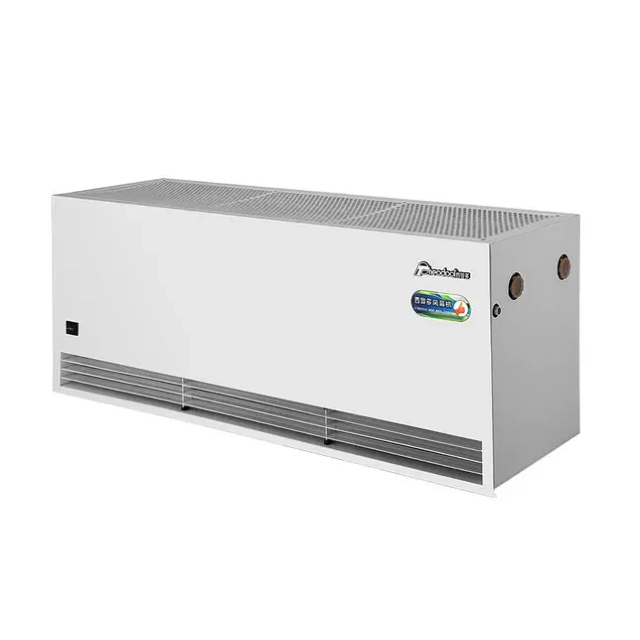
Integrating a water heated air curtain into a building’s heating network requires attention to several design parameters. The boiler’s capacity must be evaluated to confirm it can handle the additional load without reducing heating efficiency elsewhere. The coil should be correctly sized to deliver the required temperature rise at the air outlet, depending on the air velocity and water inlet temperature.
Other critical integration aspects include:
Flow Control: Proper modulation valves manage water flow through the coil, maintaining stable discharge temperatures.
Pumps and Pressure Balance: Adequate circulation ensures that the coil receives uniform heating, especially for long piping runs.
Automation: Linking the air curtain’s controls with the building management system allows for synchronized operation with door sensors and temperature settings.
Safety Features: Insulated pipes, pressure relief valves, and freeze protection are essential in cold climates.
The technical team from GZ THEODOOR TECH CO., LTD. assists project designers in meeting these requirements by offering guidance on pipe layout, heat load calculation, and control logic integration. Each product undergoes strict factory testing to guarantee thermal performance and hydraulic stability before delivery.
Selecting between a water heated and an electric model depends on several key factors, including energy availability, building type, and installation goals. For facilities that already operate a hot-water system or boiler, a hydronic air curtain is almost always the more cost-effective option. It draws on existing infrastructure to provide powerful heating without significantly increasing energy bills.
Electric air curtains, however, remain practical where water systems are unavailable or when quick, plug-and-play installation is needed. They are suitable for smaller entrances or temporary structures where plumbing work would be impractical.
Decision guidelines include:
Energy Source: Choose hydronic if a hot-water plant or district heating is present; electric if not.
Entrance Size: Larger doors require hydronic units for stronger heat output.
Climate Zone: Water heated systems perform best in cold or windy regions.
Control Preference: Hydronic models integrate seamlessly with advanced building control systems.
Budget Planning: Electric units are simpler to install, but hydronic ones offer superior long-term savings.
With a wide range of products, GZ THEODOOR TECH CO., LTD. helps clients select the model that best fits their operational environment and technical requirements. The company emphasizes precision engineering and system compatibility to ensure optimal results across all applications.
Beyond manufacturing excellence, GZ THEODOOR TECH CO., LTD. provides comprehensive support for every stage of the project. From system selection and coil design to piping coordination and commissioning, their technical specialists ensure seamless integration with existing HVAC systems. Each air curtain is built using premium-grade materials and undergoes rigorous testing to confirm airflow balance, noise control, and heat transfer efficiency.
Theodoor also offers detailed documentation and installation guidance, allowing contractors to connect both electrical and hydronic components efficiently. For large-scale projects, on-site technical assistance and start-up supervision are available to guarantee proper commissioning. With reliable warranty coverage and responsive after-sales service, customers gain peace of mind that their investment will perform consistently for years to come.
A Water Heated Air Curtain is the superior choice for large entrances, providing strong air separation, consistent thermal comfort, and significant energy efficiency. By using an existing hot-water system, it minimizes operational costs while maintaining indoor temperature stability. GZ THEODOOR TECH CO., LTD., as a trusted manufacturer of high-performance air curtains and energy-saving equipment, delivers advanced hydronic solutions that meet the needs of modern commercial and industrial facilities worldwide. For more details about our hydronic air curtain systems or to receive technical consultation on your project, contact us today.


