


Views: 0 Author: Site Editor Publish Time: 2026-07-08 Origin: Site


Commercial entrances face relentless daily challenges. Facility managers constantly battle fluctuating indoor temperatures, aggressive pest infiltration, and escaping conditioned air. These operational realities heavily impact daily efficiency, hygiene, and customer comfort. You cannot ignore the strain these factors place on heavily trafficked entryways.
Upgrading from standard powder-coated units to a robust stainless steel air curtain marks a strategic shift for high-demand environments. Paint and plastic often degrade rapidly under rigorous cleaning protocols or harsh weather. Stainless steel provides unmatched durability and hygienic performance where standard metals easily fail.
This guide provides an evidence-based framework for evaluating, specifying, and procuring stainless steel entrance solutions for commercial and industrial facilities. We will explore structural considerations, regulatory compliance, and core performance metrics. You will learn exactly how to specify the right equipment to secure your facility effectively.
Modern commercial facilities operate under strict regulatory scrutiny. Food processing plants, hospitals, and pharmaceutical environments must maintain flawless hygiene standards. Food-grade stainless steel simplifies washdowns significantly. Its non-porous surface denies bacteria and mold the microscopic crevices they need to breed. Standard painted metals easily scratch. Once scratched, moisture enters the substrate and creates rust.
Stainless steel resists this deterioration effortlessly. Facilities utilizing harsh chemical cleaners or high-pressure hoses rely on this material to maintain structural integrity. Choosing an unpainted metal housing directly supports compliance efforts. Inspectors from the FDA, USDA, and NSF look favorably upon equipment designed for rigorous sanitation. By eliminating flaking paint and corrosion, you eliminate severe compliance risks over the equipment lifecycle.
Best Practice: Always schedule routine surface wipe-downs using non-abrasive cleaners to maintain the passivation layer on the metal surface.
Front-door commercial applications demand visual appeal alongside high performance. A commercial air curtain installed in a premium retail space, hotel lobby, or modern restaurant must blend seamlessly into the architectural design. Powder-coated units may look acceptable initially. However, they frequently degrade visually over time. Scuffs, fading, and chipping paint ruin the professional appearance of your entrance.
Stainless steel delivers a sleek, architectural finish. It complements modern building facades, exposed ductwork, and glass vestibules. The reflective surface looks premium and communicates cleanliness to incoming customers. When you install visible equipment above your main customer entrance, visual longevity matters just as much as mechanical reliability.
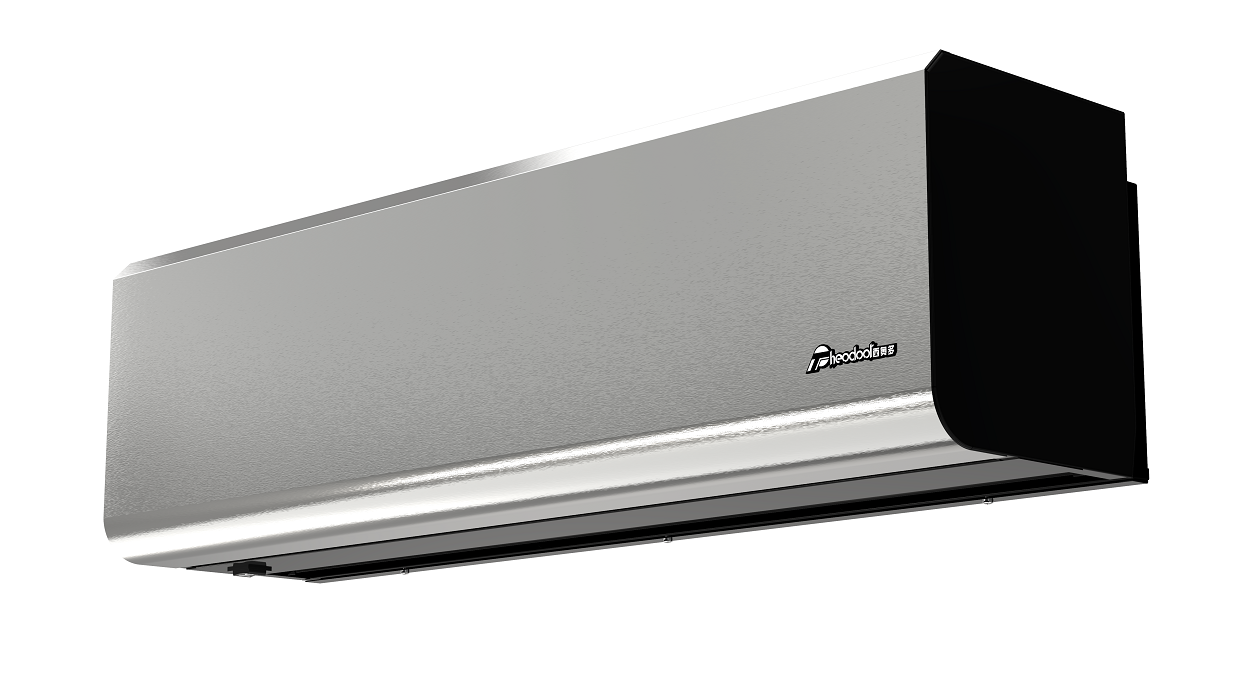
Not all stainless steel offers the same level of protection. You must select the correct alloy grade based on your facility environment. The two most common grades in commercial manufacturing are Type 304 and Type 316.
Industry professionals consider 304 stainless steel the standard for commercial environments. It provides excellent corrosion resistance for typical indoor and outdoor applications, including restaurants and standard retail. Type 316 contains added molybdenum. This chemical addition dramatically increases resistance to chlorides and industrial solvents. You should specify 316 specifically for extreme chemical facilities, meat processing plants using heavy sanitizers, or coastal environments battling continuous salt spray.
| Feature | Type 304 Stainless Steel | Type 316 Stainless Steel |
|---|---|---|
| Alloy Composition | 18% Chromium, 8% Nickel | 16% Chromium, 10% Nickel, 2% Molybdenum |
| Corrosion Resistance | High (Standard commercial environments) | Superior (Resists chlorides and harsh chemicals) |
| Ideal Applications | Retail, standard restaurants, indoor facilities | Coastal areas, chemical plants, extreme washdowns |
| Relative Cost | Baseline commercial standard | Premium (Higher initial material cost) |
Proper sizing dictates success. You must match the motor power and nozzle design directly to your exact door height. The equipment creates a protective barrier by forcing air downward across the opening. To effectively stop wind, pests, and temperature transfer, the air must reach the floor at a specific velocity. Industry standards dictate a minimum velocity of 400 feet per minute precisely at the floor level to deter flying insects effectively.
Common Mistake: Facility owners sometimes purchase under-sized units to save initial capital. A weak air stream breaks halfway down the doorway. This negates the air seal completely and wastes energy. Always measure the exact vertical clearance from the floor to the mounting header before specifying a unit.
Air movement generates noise. High-velocity industrial motors push massive volumes of air, which inherently increases decibel ratings. You must carefully balance acoustic performance against environmental demands.
In heavy manufacturing, high noise levels matter less than creating an impenetrable wind barrier. Conversely, consumer-facing environments require a delicate balance. A restaurant entrance cannot subject arriving guests to deafening industrial fan noise. For these spaces, manufacturers utilize specialized blower wheels, acoustically insulated plenums, and variable speed controllers. You can dial back the velocity during calm weather to reduce ambient noise, preserving a welcoming atmosphere while maintaining basic temperature control.
Cold storage facilities operate under extreme temperature deltas. The difference between a freezing cooler and a warm prep kitchen creates severe condensation risks. When you open a cooler door, heavy cold air rushes out the bottom while warm, moist air enters the top. This moisture instantly freezes on ceilings and floors, creating dangerous slip hazards and compromising food safety.
A properly specified hygienic unit stops this convective exchange. By maintaining strict cold chain temperatures, you protect perishable inventory and reduce compressor runtimes. Furthermore, back-of-house restaurant areas require robust flying insect control. A specialized stainless steel series air curtain blocks flies and mosquitoes from entering loading docks and kitchen exits. Sanitation mandates strictly require these invisible barriers over food handling entryways.
Industrial applications demand raw power. Manufacturing plants, logistics hubs, and shipping centers feature massive roll-up doors exposed to direct wind loads. Standard commercial fans cannot overcome negative building pressure or high-velocity wind gusts.
Extra heavy-duty series models feature continuous-duty motors designed to run 24/7 without overheating. They utilize deep fan housings to generate extreme static pressure. These robust machines also resist airborne particulates, dust, and debris commonly found in fabrication shops. Upgrading to unpainted metal ensures the housing survives accidental impacts from forklifts and routine exposure to industrial lubricants.
When tackling rigorous industrial environments, standardized heavy-duty configurations offer proven reliability. The 50S3 air curtain represents a benchmark profile for these challenging applications.
This technical profile generally features robust three-phase motors capable of pushing air efficiently across expansive vertical drops. It excels in environments where installation heights range between 12 to 16 feet. Typical commercial use cases include large receiving bays, aviation hangars, and heavy distribution centers. Its aerodynamic nozzle design ensures a tight, concentrated jet stream that maintains its integrity even amidst crosswinds, making it an indispensable asset for large-scale temperature preservation.
Off-the-shelf equipment works well for standard retail doorways. However, complex facilities often require specialized solutions. Pursuing an OEM air curtain becomes necessary when you encounter unique architectural constraints.
OEM manufacturing allows for precise customization. You can request custom lengths to fit non-standard door widths perfectly. You can specify unique voltage configurations matching legacy electrical panels. Additionally, large distributors often utilize OEM partnerships for private labeling purposes. By working directly with a capable manufacturer, you ensure the equipment matches your exact operational and branding requirements.
Marketing brochures often exaggerate performance metrics. Do not rely on generalized specifications when procuring critical building infrastructure. You must demand certified performance data from your vendors.
Look for testing certifications from recognized bodies like AMCA (Air Movement and Control Association) or equivalent international standards. Certified data guarantees the unit actually delivers the stated CFM (Cubic Feet per Minute) and velocity. If a vendor cannot produce independent laboratory testing results, you risk installing equipment that fails to seal your doorway effectively.
B2B procurement involves significant logistical realities. Heavy stainless steel equipment requires careful supply chain management.
You cannot install heavy commercial equipment using standard drywall anchors. The critical weight difference between lightweight aluminum or plastic units and a solid stainless steel housing changes the installation methodology entirely. A heavy-duty model can weigh well over 100 pounds depending on its length.
You must verify the structural integrity of the mounting header before procurement. Reinforce the mounting brackets by tying directly into steel beams or solid masonry. If installing over a glass storefront, you may need to fabricate custom structural tubing to support the suspended weight safely. Neglecting structural loads poses severe safety risks to pedestrians passing below.
Avoid costly electrical retrofits by validating your power supply early. Commercial motors draw significant amperage.
Installation does not end when you mount the equipment to the wall. Post-installation commissioning ensures the unit operates correctly.
First, test the automated door-switch triggers. The motors must activate immediately as the door opens and power down promptly after closure. Second, adjust the directional vanes carefully. You rarely point the nozzle straight down. For optimal impingement against drafts, angle the vanes outward toward the exterior by 10 to 15 degrees. This outward thrust creates a wedge effect that actively repels incoming wind and flying insects.
Specifying a commercial entrance solution requires a careful balance. You must weigh environmental demands and aesthetic requirements against your practical budget realities. Stainless steel provides the ultimate defense against corrosion, sanitation failures, and physical wear, ensuring your facility remains secure and compliant.
Follow this final shortlisting checklist before finalizing your procurement:
A: A high-quality stainless steel unit typically lasts 10 to 15 years. The heavy-duty housing easily outlasts the internal components. While the exterior resists rust and impacts indefinitely, standard continuous-duty motors generally require replacement or significant servicing after 40,000 to 50,000 hours of active operational use.
A: No. It requires minimal, straightforward maintenance. You must clean the internal air intake filters quarterly to prevent dust accumulation from straining the motor. For the exterior, simply use a standard non-abrasive stainless steel cleaner and a microfiber cloth to wipe down the housing and maintain its aesthetic shine.
A: Yes. Most professional units integrate seamlessly into modern Building Management Systems (BMS). Installers utilize standard limit switches, magnetic door contacts, and low-voltage relays to connect the equipment. This allows central control panels to monitor motor status and schedule operations based on building occupancy hours.
A: No. Type 304 stainless steel is completely sufficient for standard retail and restaurant environments. It resists general moisture and routine cleaning effortlessly. You only need to upgrade to Type 316 if your entrance faces heavy coastal salt spray, or if the unit operates inside a highly corrosive chemical processing facility.


