


Views: 0 Author: Site Editor Publish Time: 2026-04-10 Origin: Site


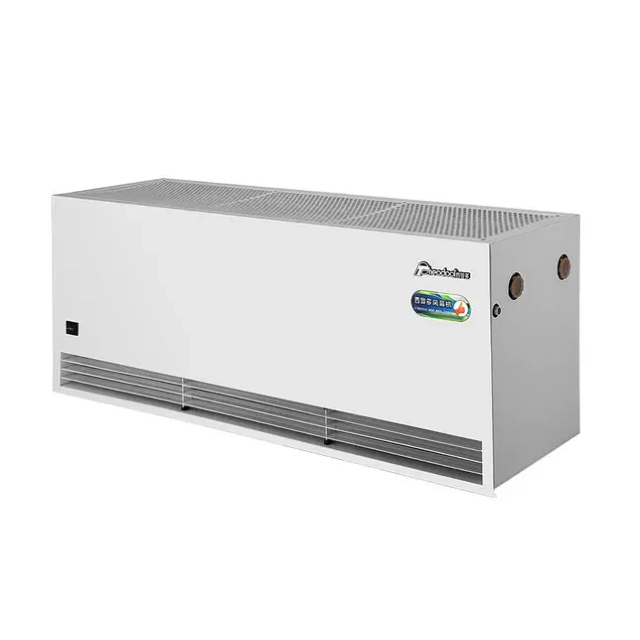
In high-traffic commercial and industrial buildings, the open door is a constant battleground. Every time a person enters or a forklift passes, carefully conditioned indoor air escapes, and the harsh outdoor climate rushes in. This "open door dilemma" leads to soaring energy bills, uncomfortable drafts for staff and customers, and a constant strain on HVAC systems. The solution is an invisible barrier, a powerful stream of air that seals the opening. A heated air curtain not only prevents energy loss but also provides a welcoming blast of warmth at the entrance. However, choosing the right system is a critical infrastructure decision. The choice between an electric and a water-heated (hydronic) unit goes beyond a simple purchase; it involves assessing your building's existing utilities, long-term goals, and total cost of ownership. This technical comparison will guide facility managers, engineers, and architects in selecting the system that delivers the best performance and return on investment.
Infrastructure Dependency: Water-heated units require an existing boiler or HVAC loop; electric units require high-amperage electrical capacity.
Operational Cost: Water-heated systems generally offer lower running costs in large-scale industrial settings, while electric units offer lower upfront installation costs.
Maintenance Realities: Electric units are "set and forget" but have shorter component lifespans (PTC heaters); water units are durable but require freeze protection and descaling.
Climate Versatility: Water-heated air curtains can double as cooling barriers if connected to a chilled water system.
While both systems create a thermal barrier to separate indoor and outdoor environments, their methods of generating heat are fundamentally different. Understanding this technology is the first step in making an informed decision about which Air Curtain is right for your facility.
Electric units are known for their simplicity and rapid heat delivery. They function much like a high-powered, focused fan heater, using electrical resistance to generate warmth. The core heating technologies include:
PTC (Positive Temperature Coefficient) Heaters: These are self-regulating ceramic elements. As they reach their designed operating temperature, their electrical resistance increases, naturally reducing current flow and preventing overheating. This makes them exceptionally safe and durable.
Stainless Steel Finned Tubes: In this design, an electric coil heats up, and the attached fins increase the surface area for transferring that heat to the air blown by the fans.
The primary advantages of an electric Heated Air Curtain are its instant heat and precise thermostatic control. You can achieve the desired temperature almost immediately. Their modular design also makes them easy to install over standard doorways without extensive infrastructure changes, provided sufficient electrical capacity is available.
A Water Heated Air Curtain, also known as a hydronic unit, operates like a vehicle's radiator. It doesn't generate its own heat but rather transfers it from an external source. It integrates a heat exchanger, typically made of copper tubes and aluminum fins, into its housing. Hot water or steam from the building's central boiler or hot water loop is pumped through this coil. As the air curtain's fans blow air across the hot fins, the thermal energy is transferred, creating a warm air stream.
A significant "dual-purpose" advantage emerges here. If the building has a chilled water system for air conditioning, the same unit can be connected to it during the summer. By circulating chilled water through the coils, it can provide a cool air barrier, enhancing AC efficiency and comfort. This versatility makes it an integrated part of a building's total climate control system.
It's a common mistake to think that the effectiveness of a heated air curtain comes from raw heat output alone. The real secret lies in fluid dynamics. The goal is to create a strong, continuous, and uniform sheet of air—a principle known as laminar flow. This is where high-quality design elements like a "Plenum" chamber become critical. A plenum is an internal chamber that pressurizes the air before it's discharged. This design ensures the air is distributed evenly across the entire width of the unit, preventing "dead zones" between fans and creating an unbroken seal. A well-engineered barrier is what stops energy loss, not just a blast of hot air.
Choosing between electric and water-heated systems requires a thorough analysis of the total cost of ownership (TCO), which includes upfront costs, installation complexity, and long-term operating expenses.
At first glance, electric air curtains typically have a lower purchase price. Their manufacturing process is more straightforward. However, this initial saving can be misleading. For high-power units needed for large doors, you might face significant hidden costs in upgrading electrical infrastructure, such as running new high-amperage circuits or even upgrading the building's main electrical panel or transformer.
Water-heated units command a higher purchase price. The sophisticated copper/aluminum heat exchangers and robust, leak-proof housing required for hydronic systems are more expensive to produce. However, this cost is for the unit itself and doesn't include the plumbing infrastructure it relies on.
Installation requirements present a clear divide between the two technologies.
Electric Units: Installation is primarily an electrical task. It involves mounting the unit and connecting it to a dedicated circuit of the appropriate voltage and amperage. For larger industrial models, this often means wiring to a 3-phase power supply, which requires a qualified electrician.
Water Units: Installation is a mechanical and plumbing project. It requires a professional plumber to run supply and return pipes from the boiler to the air curtain, installing shut-off valves, and potentially adding a circulation pump to ensure adequate flow. This process is inherently more invasive and complex than running an electrical wire.
This is where water-heated systems truly shine, especially in industrial settings. If a facility already has a large, efficient boiler running for other processes or for general heating, using that existing hot water is incredibly cost-effective. You are essentially leveraging "waste heat" or tapping into a highly efficient central heat source. The cost per BTU of heat from a central gas boiler is often significantly lower than the cost per BTU from electricity.
Electric units, while 100% efficient at converting electricity to heat at the point of use, are subject to the high per-kWh cost of electricity. For a loading bay door that is open for hours each day, the operational cost of a powerful electric heater can quickly outstrip its lower initial purchase price. The return on investment (ROI) for a water-heated system in a high-usage environment can be dramatic, with payback periods often falling within a few years due to substantial energy savings.
Factor | Electrically Heated Air Curtain | Water Heated Air Curtain |
|---|---|---|
Upfront Cost (CAPEX) | Lower unit price; potential for high electrical upgrade costs. | Higher unit price; relies on existing boiler infrastructure. |
Installation | Simpler; requires a qualified electrician and sufficient power capacity. | More complex; requires professional plumbing for pipework and valves. |
Operating Cost (OPEX) | Higher, based on per-kWh electricity rates. Best for intermittent use. | Lower, leveraging efficient central boiler systems. Ideal for continuous use. |
Versatility | Heating only. | Can provide heating and cooling (with a chilled water loop). |
The choice of heat source is only part of the equation. To maximize an air curtain's effectiveness and energy savings, you must consider the engineering that governs its airflow.
A powerful motor is useless if the air it moves is turbulent and uneven. As mentioned, the "Plenum" chamber is a key feature in premium air curtains. By allowing pressure to build and equalize before discharge, it ensures a consistent, laminar stream of air from one end of the unit to the other. This creates a more resilient and effective barrier.
Furthermore, adjustable discharge nozzles are crucial for real-world performance. The ability to angle the air stream allows installers to fine-tune the barrier, directing it slightly outward to counteract prevailing winds or inward to manage internal pressure dynamics. This optimization ensures the air barrier reaches the floor where it is needed most, completing the seal.
In high-rise buildings, large warehouses, and structures with significant height differences, a phenomenon known as the "stack effect" occurs. In winter, warm air rises and creates higher pressure at the top of the building while drawing cold air in through openings at the bottom, creating negative pressure. This pressure differential can be strong enough to "break" a weak air curtain, rendering it ineffective.
To combat this, you must select an air curtain with sufficient air velocity (measured in meters per second, m/s). The required velocity is determined by the door height and the anticipated pressure differential. A professional consultation can help calculate these needs to ensure the selected model has the power to maintain its integrity against these powerful forces.
The motor is the heart of the air curtain. While traditional AC (Alternating Current) motors have been the standard for years, modern EC (Electronically Commutated) motors offer a leap forward in efficiency and control.
Energy Efficiency: EC motors can reduce fan energy consumption by up to 67% compared to their AC counterparts. They maintain high efficiency across a range of speeds, unlike AC motors which are most efficient at full power.
Control and Noise: EC motors allow for precise, variable speed control. This means you can adjust the fan speed to match conditions perfectly, balancing performance with noise levels. During off-peak hours, the speed can be reduced to save energy and create a quieter environment.
The ideal choice between electric and water-heated systems often depends on the specific application and existing infrastructure.
For large industrial doors that are open for extended periods, water-heated systems are almost always the superior choice. These facilities typically already have a robust central boiler system for heating and processing. Tapping into this existing infrastructure makes the lower operational cost of a Water Heated Air Curtain a decisive factor. Beyond cost, these powerful units are critical for addressing the "draft" issue, which directly impacts employee comfort, health, and productivity. Maintaining a stable temperature at the loading dock can significantly improve working conditions and retention.
In retail stores, restaurants, and office buildings, the priorities are different. Doors may open frequently but for shorter durations. Aesthetics and ease of retrofit are paramount. Here, electric units excel. Their lower-profile designs are easier to integrate aesthetically. More importantly, retrofitting an electric unit into an existing building without a hydronic loop is far simpler and less disruptive than a full plumbing installation. The "instant on" heat is perfect for providing a quick, welcoming burst of warmth for customers entering the premises.
In these specialized environments, air curtains serve multiple critical functions beyond temperature control.
Preventing Icing and Fogging: An air curtain at the entrance to a walk-in freezer or cold storage area prevents warm, moist air from entering and creating dangerous ice buildup on floors and ceilings or fog that impairs visibility.
Moisture Control: By blocking humid air, they help maintain low humidity levels, which is crucial for product quality and safety.
Sanitation: The continuous stream of air acts as a barrier against flying insects, dust, and other airborne contaminants, which is essential for meeting hygiene standards in food processing zones.
In these applications, the choice of heated or non-heated depends on the temperature differential and specific goals, but the principle of creating a strong air barrier remains the same.
Proper implementation involves understanding potential risks and adhering to industry regulations to ensure safety, performance, and legality.
For water-heated units installed in climates with sub-zero temperatures, the risk of water freezing inside the heat exchanger coil is a serious concern. If the boiler is shut down or power is lost during a cold snap, the water in the coil can freeze, expand, and rupture the copper tubes, leading to costly repairs and water damage. Critical maintenance protocols must be in place:
Proper Drainage: Ensuring the system can be fully drained if it will be inactive during cold weather.
Anti-Freeze Solutions: In some closed-loop systems, a glycol/water mixture can be used as the heat transfer fluid to prevent freezing.
Fail-Safes: Some control systems can automatically activate the circulation pump to keep water moving if the temperature drops to a critical level.
Modern building codes recognize the effectiveness of high-performance air curtains. According to key industry standards like ASHRAE 90.1-2019 and the International Energy Conservation Code (IECC), an AMCA (Air Movement and Control Association) certified air curtain can be used as a legal alternative to a built-in vestibule at main entrances. This is a huge advantage for architects and developers, as it frees up valuable floor space that would otherwise be lost to a vestibule, increasing leasable area and design flexibility.
Safety is non-negotiable for both system types.
Electric Units: Must include overheat protection thermostats that automatically shut the unit down if airflow is blocked or the unit exceeds a safe operating temperature.
Water Units: The hydronic coils must be pressure-tested to ensure they can handle the building's water pressure without leaking. Proper installation by a certified professional is essential to prevent leaks and ensure safe operation.
The decision between an electrically heated and a water-heated air curtain is not about which is universally "better," but which is strategically right for your specific facility and operational goals. The choice boils down to a clear set of conditions.
Choose an Electric Heated Air Curtain If: You are retrofitting a space that lacks a central boiler system, your usage is intermittent (like a retail entrance), you need the lowest possible installation footprint and complexity, or your primary concern is minimizing upfront capital expenditure.
Choose a Water Heated Air Curtain If: Your facility has an existing and efficient hot water or steam loop, the air curtain will be operating for long hours (like an industrial loading bay), your primary goal is achieving the lowest possible long-term energy bill, or you want the versatility of using it for cooling in the summer.
Your final action before purchasing should always be to consult with a qualified HVAC engineer or the manufacturer's technical team. They can perform a detailed "Wind Load" and "Heat Loss" calculation for your specific doorway. This analysis will determine the precise kW (for electric) or BTU (for water) output required to create an effective barrier, ensuring you invest in a system that is perfectly sized for the job.
A: The noise level of a modern air curtain is typically comparable to that of a normal conversation (around 50-60 decibels), depending on the fan speed setting. High-performance industrial models designed for high-noise environments may be louder. Models with EC motors often offer quieter operation at lower speeds, allowing for greater control over the acoustic environment.
A: Yes, this is one of its key advantages. If your building has a chilled water system for air conditioning, the same water-heated unit can be connected to it. By circulating chilled water through the coil instead of hot water, it will produce a cool stream of air, helping to keep conditioned air inside and reduce the load on your AC system.
A: The lifespans differ significantly. The PTC ceramic heaters in electric units are very durable but may eventually require replacement after many years of heavy use. In contrast, the copper/aluminum hydronic coils in water-heated units are designed to last for decades, often for the entire life of the unit, provided they are protected from freezing and water quality is maintained to prevent corrosion or scaling.
A: Absolutely. Installing a water-heated air curtain requires professional plumbing expertise to connect the unit to the building's boiler loop, ensuring all connections are secure, leak-free, and properly valved. Attempting a DIY installation can lead to water damage, system failure, and will almost certainly void the manufacturer's warranty.
A: The stack effect is a pressure difference caused by temperature variations between the inside and outside of a tall building. In winter, warm air rises and exits at the top, creating negative pressure that pulls cold air in through lower-level openings like doorways. This pressure can be strong enough to overpower an undersized air curtain, making it crucial to select a model with enough velocity to overcome it.


