


Views: 0 Author: Site Editor Publish Time: 2026-07-15 Origin: Site


Standard HVAC systems frequently leave problematic thermal dead zones. These imbalances cause uneven temperatures across different spaces. Consequently, your central cooling and heating equipment overworks heavily to compensate. Relying solely on central ductwork or portable floor fans proves highly inefficient. Floor units scatter breezes randomly instead of directing them effectively. They fail completely at targeted thermal transfer, like pushing cold air between adjacent rooms.
Strategically deployed wall-mounted fans solve this physical limitation perfectly. They provide directional, continuous air movement. This equalizes ambient temperatures. It also drastically reduces heavy HVAC loads. You gain much better environmental control in residential and commercial spaces.
We will explore how to select the right units for your specific layout. You will learn optimal placement strategies and sizing requirements. We will also cover scaling considerations for both homes and demanding commercial environments.
Understanding basic thermodynamics is essential for effective climate control. Warm air naturally expands and rises. Conversely, cold air remains dense and sinks to the floor. When you run a window air conditioner in a living room, the adjacent hallway often remains stiflingly hot. Central HVAC vents often lack the horizontal velocity needed to push this dense, chilled air into stagnant zones.
Proper room air circulation requires horizontal kinetic force. Wall-mounted units specialize in this specific task. They pull conditioned air from the source room and forcefully inject it into the adjacent space. This mechanical transfer equalizes the temperature gradient much faster than passive diffusion.
Floor fans consume valuable real estate. They present constant tripping hazards. Power cords snake across walking paths, creating safety liabilities. We often see facilities rely on large pedestal fans. People constantly bump into them. They obstruct machinery operations or everyday foot traffic. Wall mounting reclaims your floor space entirely. It lifts the equipment out of the primary activity zone. This keeps environments safer and significantly more organized.
Oscillating floor units are designed for broad human comfort. They sweep breezes across a wide area. They scatter the air rather than moving it deliberately. Wall-mounted circulators operate differently. They establish a sustained, predictable air tunnel. This concentrated airflow pierces through thermal barriers. It disrupts stratification by maintaining constant pressure along a specific vector. You move air exactly where you need it.
Choosing the correct fan size dictates your success. Manufacturers often advertise "peak" CFM. This number represents the absolute maximum output under ideal testing conditions. You must calculate your actual required CFM based on room volume.
First, determine the room volume (Length x Width x Height). Next, decide how many complete air exchanges you need per hour. A standard residential space usually requires three to four exchanges per hour. Over-speccing a fan causes intense drafts. It also leads to excessive noise. Under-speccing leaves the air stagnant. Consult the baseline estimates below for general sizing guidance.
| Room Volume (Cubic Feet) | Recommended CFM Minimum | Common Application Area |
|---|---|---|
| Under 1,000 | 100 - 150 | Small offices, walk-in closets |
| 1,000 - 2,500 | 200 - 400 | Standard bedrooms, small workshops |
| 2,500 - 5,000 | 500 - 800 | Living rooms, large basements |
| 5,000+ | 1,000+ | Warehouses, agricultural sheds |
Basic pull-cords are obsolete for efficient thermal management. A modern circulation wall fan frequently includes intelligent controllers. Smart thermostats trigger the fan only when the source room reaches a specific temperature differential. This prevents the system from running needlessly. It stops you from accidentally pulling hot air into a cooled room. Programmable timers also allow you to match airflow operation to daily occupancy schedules.
Seasonal adaptability is a crucial feature. Reversible motors provide dual functionality. During summer, you want to pull dense, cold AC air into warm spaces. During winter, you reverse the blade rotation. This pushes warm air back toward cooler zones. Or, you can use the reverse function to exhaust stuffy air outdoors if mounted on an exterior wall. Reversible units eliminate the need to physically unmount and turn the fan around twice a year.
High-velocity air movement inevitably generates noise. Manufacturers measure this noise in sones. One sone roughly equals the sound of a quiet refrigerator in a quiet kitchen. For residential bedrooms or office spaces, look for units rated below 1.5 sones. Industrial spaces tolerate much higher sone levels. Always balance the need for high CFM against acceptable acoustic thresholds for your specific environment.
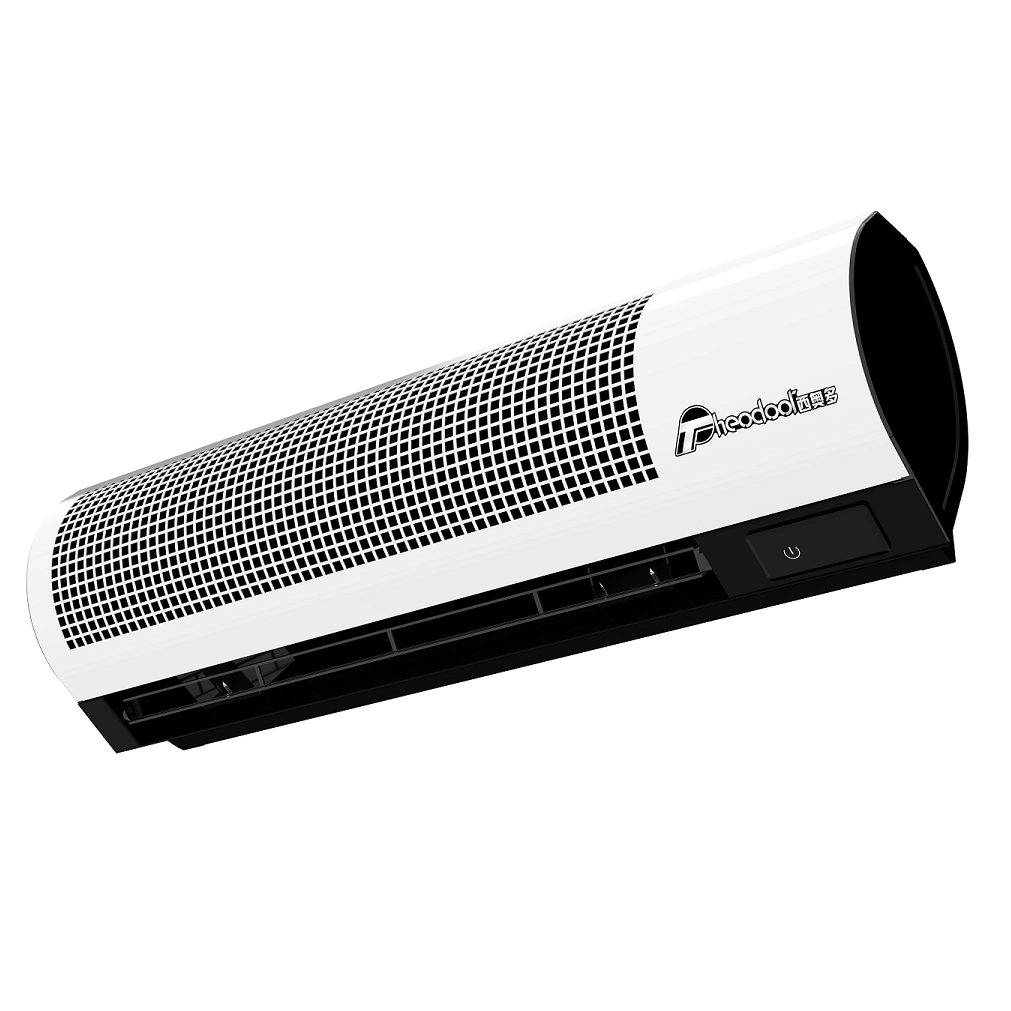
Correct placement ensures peak efficiency. A common mistake is installing a fan at eye level when trying to move cold air. Because cold air is dense, it settles near the baseboards. If your primary goal is transferring chilled AC air into an adjacent room, mount the fan low. Install it near the floor level. This position captures the coldest air volume directly. It acts like a pump, pushing the heavy, chilled air forcefully through the wall opening into the next room.
High ceilings create massive thermal traps. Heat rises naturally. During winter, all your expensive heating energy collects near the roof deck. High mounting solves this issue through destratification. You point the fans downward to force the trapped warm air back to floor level. During summer, high mounting serves a different purpose. You aim the fan outward to exhaust the hottest ceiling air directly out of the building. This strategy dramatically improves comfort in vaulted spaces.
Installing a fan through drywall requires careful structural planning. First, you must locate wall studs to avoid cutting structural supports. The fan housing sleeve must perfectly match your wall depth (typically 4.5 to 6 inches for standard interior walls). If the sleeve is too short, airflow leaks into the wall cavity. This creates massive inefficiency. Secondly, incorporate vibration-dampening pads between the fan chassis and the framing studs. Drywall acts like a drum. Without rubber isolators, the motor vibrations will resonate loudly throughout the entire house.
Commercial environments destroy residential-grade fans quickly. Standard residential models use cheap shaded-pole motors. They overheat under continuous strain. When scaling up to an industrial wall fan, you must demand a continuous-duty motor. Look specifically for TEFC (Totally Enclosed Fan Cooled) designs. These motors are permanently lubricated. The enclosed casing prevents debris from fouling the internal windings. They are engineered to run 24 hours a day, seven days a week, without degrading.
Facilities like warehouses, commercial gyms, or agricultural barns expose equipment to harsh elements. You must evaluate the IP (Ingress Protection) rating. The IP rating dictates how well the fan resists dust and moisture.
Safety compliance becomes paramount when installing heavy-duty equipment. A powerful commercial cooling fan generates intense torque upon startup. Standard drywall anchors will fail catastrophically. These units require heavy-gauge steel mounting brackets bolted directly into structural masonry or steel I-beams. Best practices dictate installing secondary safety retention cables. If the primary bracket fails, the steel cable prevents the heavy motor assembly from falling onto personnel below.
Off-the-shelf products often fail to meet specific architectural or engineering demands. Large HVAC contractors or facility managers frequently turn to specialized manufacturing partners. Selecting an OEM wall fan provider unlocks deep customization. You can specify exact blade pitches for unique CFM requirements. You can integrate proprietary smart controllers compatible with your building management systems (BMS). OEMs can even provide custom branded housings to match corporate color schemes.
You cannot risk facility fires or electrical failures. When vetting an OEM partner, thoroughly audit their safety certifications. Ensure every component carries legitimate UL (Underwriters Laboratories) or ETL listings for the North American market. For European deployments, CE marking is mandatory. Do not accept self-certified claims. Request the actual certification registration numbers. Cross-reference them directly through the testing laboratory databases.
Large-scale deployments require reliable logistics. Assess the manufacturer's supply chain stability. Ask about lead times for custom runs versus standard bulk orders. Review their tiered pricing structures for volume purchasing. Most importantly, scrutinize the warranty terms. A strong OEM partner offers comprehensive post-sale technical support. They should provide readily available replacement parts, ensuring your systems face minimal downtime over their lifespan.
Selecting the right wall-mounted air movement system requires evaluating your primary goals. If you need room-to-room thermal transfer, prioritize smart controls, low mounting, and accurate CFM sizing. If you face large-space destratification challenges, prioritize continuous-duty motors, high mounting, and rugged IP ratings. The right equipment stabilizes ambient temperatures efficiently.
To move forward, follow these immediate next steps:
A: Mount low to push cold air (which settles near the floor) into adjacent rooms. Mount high if the goal is to exhaust hot air or disrupt heat trapped at the ceiling.
A: Room-to-room fans are specifically designed to be installed through the drywall, often featuring reversible airflow and temperature controllers to automate thermal transfer between separated spaces.
A: Industrial units feature heavier-gauge steel housing, enclosed continuous-duty motors (often IP-rated for dust/water), and significantly higher CFM, designed to run 24/7 without motor degradation.
A: Yes, by eliminating hot/cold spots, the central thermostat receives more accurate ambient readings, preventing the HVAC system from over-cycling to cool a single difficult zone.


