


Views: 0 Author: Site Editor Publish Time: 2026-07-10 Origin: Site


High-traffic warehouse doors create massive energy vulnerabilities. They compromise climate-controlled zones and risk rapid pest infiltration. Relying solely on slow-moving mechanical doors creates severe workflow bottlenecks. Plastic strip curtains also slow down operations and reduce visibility.
Facility managers and logistics directors face a complex challenge. Selecting an industrial air curtain requires moving past basic CFM (Cubic Feet per Minute) ratings. You must evaluate wind load resistance carefully. It is vital to match door height velocity requirements precisely. Seamless integration into existing dock equipment matters immensely for daily efficiency.
A successful deployment depends on several key mechanical factors. You must match motor strength to specific environmental demands. Discharge uniformity and heating capabilities also play crucial roles. This approach ensures a strong return on investment. It delivers utility savings and strict regulatory compliance without disrupting daily operations.
Thermal loss at shipping and receiving doors bleeds facility budgets daily. Truck bays expose vast indoor spaces to extreme exterior temperatures. Cold storage transitions lose chilled air rapidly during loading sequences. This sudden temperature shift forces refrigeration compressors to run continuously. It increases wear and tear on expensive HVAC infrastructure.
You need clear success metrics to justify the procurement. Energy retention stands as the primary financial driver. Documented reductions in HVAC tonnage workloads prove the equipment's value. Cycle times also improve dramatically across the warehouse floor. Traditional high-speed roll-up doors force forklift drivers to pause. This waiting period slows down throughput. Air barriers eliminate this wait entirely. Drivers move freely between distinct climate zones.
Compliance and safety present another critical evaluation metric. The FDA and USDA mandate flying insect control in food facilities. They require specific minimum air velocities to repel pests effectively. Scratched plastic strip curtains block driver visibility. This creates severe collision risks at busy docks. Air barriers maintain perfectly clear sightlines for material handling equipment.
We must acknowledge specific equipment limitations upfront. Air barriers provide environmental separation. They do not offer physical security against intrusion. Severe negative building pressure degrades their efficiency significantly. Outside air forces its way through the air stream. You must balance the warehouse HVAC system first to achieve optimal results.
Many buyers look solely at nozzle velocity during procurement. This number often misleads facility engineers. It serves mostly as a vanity metric. The critical evaluation metric is FPM at 36 inches off the floor. This measurement proves the air barrier reaches the most vulnerable zone. Bugs and dust typically enter near the floor surface.
Loading docks face brutal external wind shear constantly. You must account for this pressure during unit selection. A properly sized heavy duty air curtain combats strong coastal or valley winds. These robust units utilize significantly larger blower wheels. They feature powerful direct-drive motors. These motors typically range from 1 to 5 HP per motor. The total motor size depends heavily on the specific door width.
Width matching remains a non-negotiable specification for success. You must overlap the doorway width properly. We recommend at least 1 to 2 inches of overlap on each side. Edge-leakage destroys environmental separation. It allows hot or cold air to bypass the protective barrier.
To ensure proper sizing, follow these mandatory evaluation steps:
High-velocity airflow creates significant acoustic challenges. You must balance wind resistance against employee safety. Industrial settings enforce strict OSHA noise limits (dBA). Employees working near the dock need auditory protection. High-decibel environments cause fatigue and communication failures.
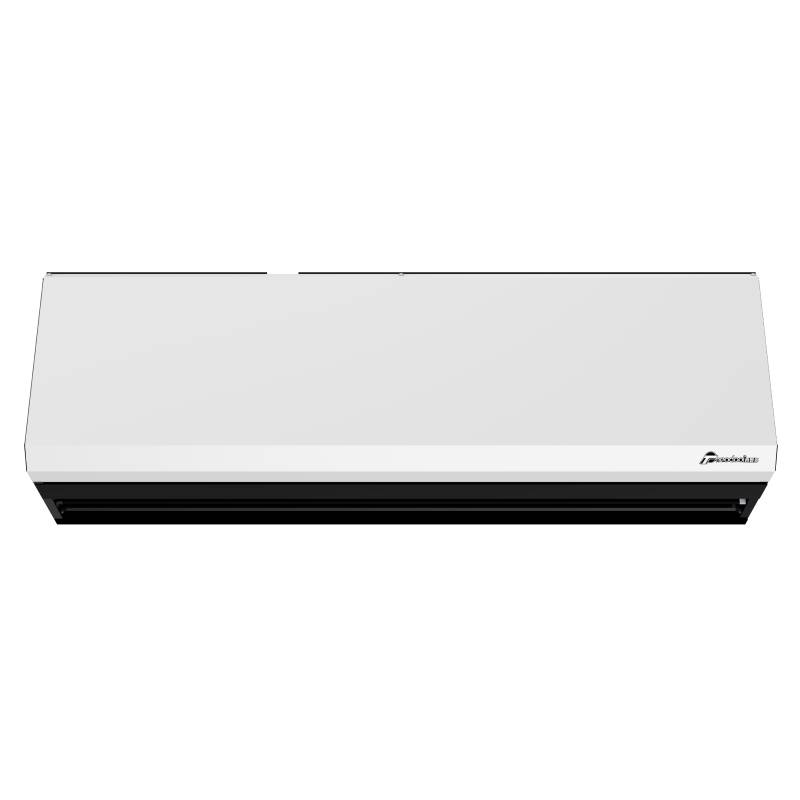
Different warehouse zones demand completely different equipment profiles. Truck bays and loading docks face the harshest exterior elements. They must repel wind, dust, and heavy exhaust fumes. These locations require robust, unheated, high-velocity models.
Cold storage and freezer doors present unique thermodynamic challenges. Warm, moist air meets freezing temperatures here. This collision causes severe condensation and dangerous ice buildup. You need specialized configurations to prevent this hazard. Facilities often pair them alongside high-speed doors. This creates a highly resilient hybrid solution.
Clean manufacturing facilities operate under strict particulate controls. Paint lines demand absolutely pristine environments. Any dust infiltration ruins product finishes instantly. Precision air barriers keep microscopic contaminants away from sensitive production zones.
You must evaluate manufacturer spec sheets carefully. Comparing a standard industrial air curtain series takes patience. You must weigh standard models against specialized heavy-duty variants. Heavy-duty variants handle massive 16-to-20-foot vertical clearances. Standard commercial models fail completely at these extreme heights.
The chart below outlines common application scenarios and their corresponding requirements.
| Application Zone | Primary Threat | Recommended Configuration | Required Vertical Clearance Capability |
|---|---|---|---|
| Truck Bays & Loading Docks | Wind, Dust, Exhaust | Unheated, High-Velocity, Direct-Drive | Up to 14 Feet |
| Cold Storage Transitions | Condensation, Ice, Thermal Loss | Specialized Defrost Sensors, Hybrid Setup | 10 to 16 Feet |
| Clean Manufacturing & Paint Lines | Micro-Particulates, Fumes | Filtered Intake, Precision Discharge | 8 to 12 Feet |
| Aviation & Heavy Industrial | Severe Wind Shear, Weather | Extra Heavy-Duty, Multi-Motor 3-Phase | 16 to 20+ Feet |
Deciding whether to heat the air stream requires careful analysis. Warehouses often choose between electric, steam, or hot water supplemental heat. Many facilities simply utilize unheated ambient models. Ambient models use the existing indoor room temperature to form the barrier.
Heated units primarily serve employee comfort near the dock. Workers standing near open bays experience severe winter drafts. Heat adds very little kinetic energy to the barrier. The environmental separation strength remains largely unchanged. Heating the air does not stop wind better than unheated air.
Technical specifications reveal massive differences between model classes. The 60S3 air curtain sets a high standard for performance. Similar high-capacity 3-phase units deliver immense reliability. Multi-motor designs survive harsh industrial environments effortlessly. They maintain consistent discharge uniformity across wide spans.
Electrical infrastructure often limits your heating choices. High-amp electric heated units draw massive amounts of power. Your facility panel might require an expensive upgrade. Steam or hot water alternatives need complex piping installations. Assess your existing utility capacity before finalizing a heated model.
Standard manufacturing handles most everyday warehouse needs. Off-the-shelf units suit standard 8x8 or 10x10 dock doors perfectly. These basic locations usually offer standard power availability. Installation proceeds quickly using basic wall brackets.
Material handling facilities often require deeper integration. Sourcing an OEM industrial curtain solves highly complex layout challenges. Manufacturers integrate these barriers directly into conveyor systems. Automated Storage and Retrieval Systems (AS/RS) portals benefit greatly from customized barriers. Custom modular cleanrooms also rely heavily on OEM designs.
Vendor vetting protects your facility from underperforming equipment. Demand verified performance data from every manufacturer. The Air Movement and Control Association (AMCA) provides independent testing. Require AMCA certified performance data for your shortlisted units. This certification verifies manufacturer claims regarding total air volume. It also confirms precise velocity measurements at various heights.
Installation poses serious structural and operational risks. Wall-mount and ceiling-suspension setups present entirely different challenges. Heavy-duty units often exceed 200 pounds in weight. Mounting them directly to insulated metal panels (IMPs) carries severe risk. IMPs lack internal strength to support such dynamic loads.
You must address specific installation hazards to ensure longevity:
Switching mechanisms dictate daily activation reliability. Limit switches trigger the unit when the door opens. You can choose plunger, roller, or magnetic reed switches. Magnetic reed switches survive dusty environments best. However, direct integration into existing dock leveler controllers works optimally. It synchronizes the entire loading dock operation perfectly.
Clearance realities often surprise installation crews. You must measure the available overhead space meticulously. The unit cannot obstruct sectional door tracks. It must sit flush or utilize extension brackets. Overhead crane operation must remain completely unimpeded. Any physical collision will destroy the unit and halt operations.
Deploying a successful environmental barrier requires strict attention to physical and structural details. You must match exact door dimensions to the appropriate motor strength and blower width. Evaluating the distinct environmental challenges, such as wind shear, pests, or freezing temperatures, dictates the final configuration.
When shortlisting vendors, apply rigorous elimination logic. Rule out commercial-grade units for any door exceeding 12 feet in height. Discard lightweight models if the door faces direct exterior wind shear. Always require third-party performance certifications to validate air volume and floor-level velocity claims.
Your next steps involve active field assessment. Conduct an airflow and building pressure audit before requesting formal quotes. Consult with an HVAC contractor or facility engineer immediately. They will confirm your available electrical capacity and identify secure structural mounting points.
A: Base your calculation on local energy costs and the average hours the warehouse door remains open daily. Factor in the manufacturer's stated barrier efficiency, which typically ranges from 70-80% energy retention. Compare the energy savings against the initial procurement and installation costs.
A: Only partially. If a building operates under severe negative pressure, outside air will forcefully bypass the air stream. The barrier will bend inward. You must balance the facility's HVAC system first to restore neutral pressure for optimal equipment efficiency.
A: CFM (Cubic Feet per Minute) measures total air volume flowing through the unit. FPM (Feet Per Minute) measures the specific speed and force of the air. High CFM with low FPM will not stop wind or pests at floor level. Heavy-duty applications require both high metrics.
A: Maintenance remains relatively minimal but absolutely critical. It involves quarterly cleaning of intake grilles and filters. You must also verify limit switch operation and conduct annual motor checks. Neglecting the intake filter drastically reduces FPM, destroying the barrier's effectiveness.


